
Why Funeral Costs Keep Rising: A 2026 Guide

Funeral costs in the United States are rising faster than general inflation, and the gap is widening. The average traditional funeral now costs $7,736, a 19% increase over five years, growing at an annual rate of 4.6% compared to the Consumer Price Index average of 3.1%. When you add cemetery fees, a traditional burial can reach between $12,000 and $17,500 total. Understanding why funeral costs keep rising gives your family real power to plan ahead, avoid surprises, and make decisions from a place of calm rather than crisis.
Why funeral costs keep rising: the main drivers
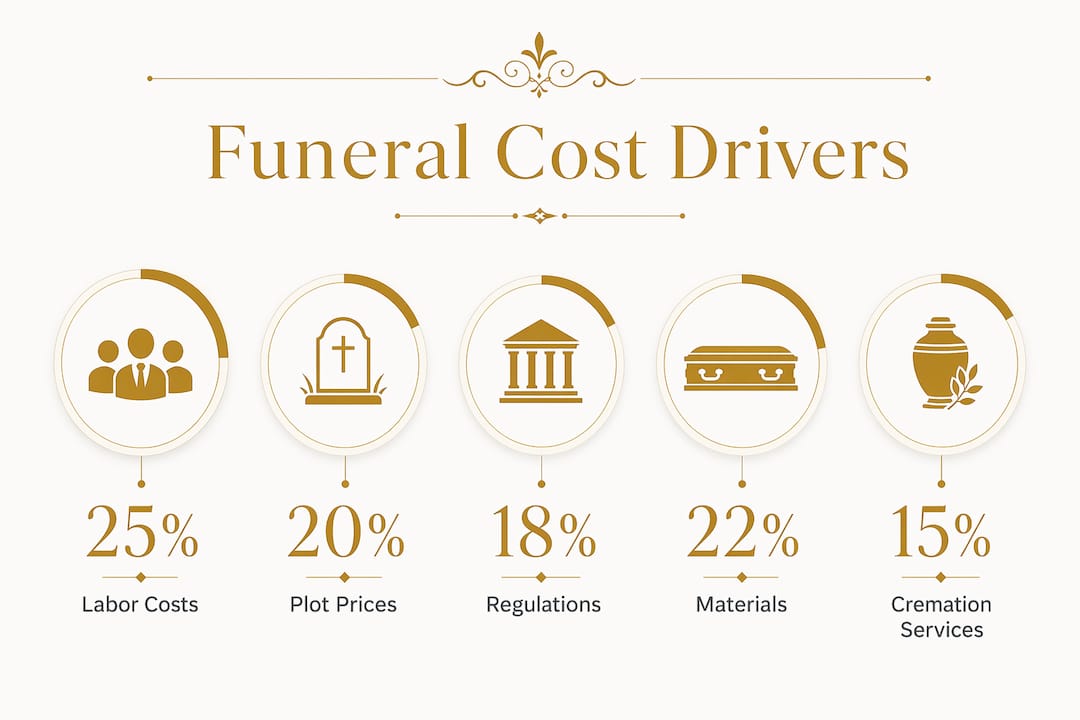
Several forces are pushing funeral expenses upward at the same time, and they reinforce each other. No single cause explains the trend. Labor, real estate, regulation, and materials all contribute.
Labor shortages and rising wages
Licensed funeral directors and embalmers require specialized training, state licensure, and ongoing education. The pool of qualified workers has not kept pace with demand, so funeral homes compete for staff by raising wages. Rising labor costs mirror the same pressure seen in healthcare and skilled trades. That cost passes directly to families.
Cemetery land and burial plot prices
Urban and suburban land is expensive, and cemeteries cannot expand easily. Cemetery plots in premium metro markets can exceed $20,000 per plot. Even in mid-size cities, burial plots routinely cost $2,000 or more. Geographic real estate scarcity is one of the most consistent drivers of total funeral expense, and it shows no sign of reversing.
Regulatory compliance costs
Funeral homes face growing requirements from the Federal Trade Commission’s Funeral Rule, OSHA workplace standards, and state environmental laws. Compliance costs are passed on to consumers, and small independent homes carry a disproportionate burden. A single-location family funeral home spends the same time and money on compliance paperwork as a large corporate chain, but spreads that cost across far fewer families.
Inflation and tariffs on materials
Caskets, urns, embalming chemicals, and transport vehicles are all subject to broader economic pressures. Gasoline prices, tariffs on wood and metal for caskets, and supply chain disruptions have pushed material costs upward. These are not funeral industry problems alone. They reflect the same inflation affecting construction, manufacturing, and food.
Pro Tip: Ask any funeral home for a General Price List before you discuss services. The FTC Funeral Rule requires them to provide one on request, in person or by phone. Reviewing it in advance gives you time to compare options without emotional pressure.
How does the rise in cremation rates affect overall funeral pricing?
Cremation is now the dominant disposition method in the United States. Cremation holds a 55.8% market share, and that share continues to grow. This shift is reshaping how funeral homes price their services and where their revenue comes from.
Direct cremation was once the low-cost alternative that families chose when budgets were tight. That is changing. Direct cremation prices rose 22% over five years to an average of $1,834 in 2026. That increase outpaces the growth rate for traditional funerals on a percentage basis. Demand has driven prices up even in the category families assumed would stay affordable.
Funeral homes have responded by building premium cremation packages that include memorial services, personalized urns, celebration of life events, and scattering ceremonies. These packages restore revenue that was lost when families moved away from traditional burial. The result is a broader price range within cremation itself, from simple direct cremation to full-service cremation memorials that approach traditional funeral costs.
| Service type | Average cost (2026) | Five-year price change |
|---|---|---|
| Traditional funeral (no cemetery) | $7,736 | +19% |
| Traditional burial (with cemetery) | $12,000–$17,500 | Varies by market |
| Direct cremation | $1,834 | +22% |
| Cemetery plot (premium metro) | $20,000+ | Varies by location |
Regional variation is significant. States in the South and Midwest show lower cremation adoption and lower average costs. California, the Pacific Northwest, and the Northeast show higher cremation rates and higher prices across all service types. San Diego families face both high real estate costs and strong demand for cremation services that reflect the region’s pricing environment.
Pro Tip: Direct cremation and a separate memorial service held weeks later can cost significantly less than a bundled package. Ask for each service priced individually so you can build the right combination for your family.
Why do local market factors and competition influence funeral prices?
Funeral pricing is highly localized. Two families in different parts of the same state can face dramatically different costs for identical services. Market density is the primary reason.
- Rural areas with few providers see higher prices because families have limited alternatives. Rural funeral costs reflect the absence of bargaining power. When one or two providers serve an entire county, there is little competitive pressure to keep prices down.
- Urban markets benefit from more providers and more price transparency. Competition moderates increases, though high real estate costs offset some of that advantage.
- Industry consolidation is reducing competition even in urban areas. Large corporate funeral chains have acquired many independent homes over the past two decades. Small independent homes struggle with regulatory costs, which accelerates consolidation and reduces the number of locally owned options.
- Timing creates vulnerability. Families making arrangements within hours of a death have almost no leverage. Grief, urgency, and unfamiliarity with pricing combine to make comparison shopping feel impossible. This is the single biggest reason families overpay.
The practical implication is clear. Families who research providers before a death occurs, or who pre-plan their own arrangements, consistently make better financial decisions. Pre-planning removes the time pressure that makes families vulnerable to unnecessary upsells.
International data supports this pattern. A 2026 burial cost comparison from European markets shows that transparent pricing and competitive density consistently produce lower costs for families, regardless of country. The mechanism is the same everywhere: informed consumers and competitive markets keep prices honest.
What are common misconceptions about funeral costs?
Several misunderstandings cause families to spend more than necessary. Knowing them in advance changes the outcome.
-
Cash advance items are not fixed funeral home fees. Flowers, clergy stipends, death certificates, and obituary notices are third-party expenses billed through the funeral home with an added handling fee. Families often assume these are standard charges. They are not. You can arrange many of them directly and avoid the markup.
-
The most expensive option is not always the most dignified. A simple direct cremation followed by a meaningful memorial service at home or in a park can honor a life just as fully as a $15,000 traditional funeral. Dignity comes from intention, not price.
-
Funeral homes can require immediate full payment. Immediate payment demands create real financial hardship for families waiting on life insurance or estate settlements. Some families take on high-interest debt or turn to crowdfunding. Pre-planning eliminates this problem entirely.
-
Prepaid funeral plans lock in today’s prices. Funeral pre-planning is one of the most effective tools available for managing rising costs. When you pre-arrange and prepay, you pay 2026 prices for services delivered years from now. That protection becomes more valuable every year prices increase.
-
Transparent, itemized pricing is your right. The FTC Funeral Rule requires funeral homes to provide itemized pricing. A funeral home that resists itemizing its fees is a warning sign. Always ask for a written General Price List and review every line before signing anything.
Pro Tip: Review the current pricing at any funeral home you are considering before you need their services. Doing this while calm gives you a clear baseline and removes the pressure of making financial decisions during grief.
Key Takeaways
Funeral costs rise faster than general inflation because labor, land, regulation, and materials all increase simultaneously, and families who plan ahead consistently pay less.
| Point | Details |
|---|---|
| Costs outpace inflation | Traditional funeral costs rose 19% over five years, nearly double the CPI rate. |
| Cemetery fees add significantly | Total burial costs reach $12,000–$17,500 when cemetery fees are included. |
| Cremation prices are rising too | Direct cremation rose 22% over five years, reaching $1,834 on average in 2026. |
| Location shapes your cost | Rural families pay more due to less competition; urban real estate adds cost regardless. |
| Pre-planning protects your family | Locking in today’s prices through pre-planning removes financial pressure at the time of death. |
What I’ve learned about funeral costs after years in this work
The families who handle this well are almost never the ones with the most money. They are the ones who had a conversation before the crisis arrived.
I have seen families spend $14,000 on a funeral they did not fully understand, then feel guilty for months wondering if they made the right choices. I have also seen families spend $2,200 on a direct cremation followed by a beautiful backyard gathering, and feel completely at peace. The difference was not the money. It was the preparation.
The funeral industry has a structural problem that is worth naming directly. When a family walks through the door within 24 hours of a death, they are not in a position to negotiate, compare, or think clearly. The industry knows this. Most providers are ethical, but the system itself creates conditions where overspending is easy and underspending feels shameful. That is not fair to families.
My honest recommendation is this: treat funeral planning the way you treat a will or a life insurance policy. Do it once, do it carefully, and then set it aside. Pre-plan your own arrangements. Talk to your adult children about what you want. Write it down. The 30 minutes you spend on that conversation will save your family thousands of dollars and enormous emotional weight.
The providers worth trusting are the ones who show you their prices without being asked, who explain every line item, and who never make you feel that spending less means loving less. Those providers exist. Seek them out before you need them.
— Steve Olsher
Bravo Family Mortuary: transparent pricing for San Diego families
Bravo Family Mortuary is a family-owned, 5-star rated funeral home serving all of San Diego County, 24 hours a day, 7 days a week. Every family receives fully itemized, all-inclusive pricing with no hidden fees, whether they choose direct cremation, traditional burial, or green burial. Arrangements can be completed entirely online through the secure PartingPros portal at any hour, without an in-person visit or sales pressure.

Bravo Family Mortuary also coordinates VA burial benefits for veteran families at no additional charge and serves Spanish-speaking families with equal care across San Diego County. Pre-planning is available for families who want to lock in today’s prices and spare their loved ones from making financial decisions under grief. We are here whenever you are ready.
FAQ
What is the average cost of a funeral in 2026?
The average traditional funeral costs $7,736 in 2026, not including cemetery fees. When burial plot and grave services are added, total costs typically range from $12,000 to $17,500.
Why are funeral costs rising faster than inflation?
Funeral costs rise faster than the Consumer Price Index because labor shortages, urban real estate prices, regulatory compliance, and material tariffs all increase simultaneously. The annual funeral cost increase rate of 4.6% compares to a CPI average of 3.1%.
Is cremation still cheaper than a traditional funeral?
Direct cremation averages $1,834 in 2026 and remains less expensive than a traditional funeral. However, direct cremation prices rose 22% over five years, so the gap between cremation and burial costs is narrowing.
How can families avoid unexpected funeral expenses?
Requesting an itemized General Price List before signing anything, arranging cash advance items like flowers directly, and pre-planning funeral arrangements are the three most effective ways to avoid surprise costs.
Does pre-planning a funeral actually save money?
Pre-planning locks in current prices for future services, which protects families from ongoing funeral price increases. It also removes the financial pressure of immediate full payment that many funeral homes require at the time of death.