Decide Later: 5 Safe Ways Families Can Handle Ashes
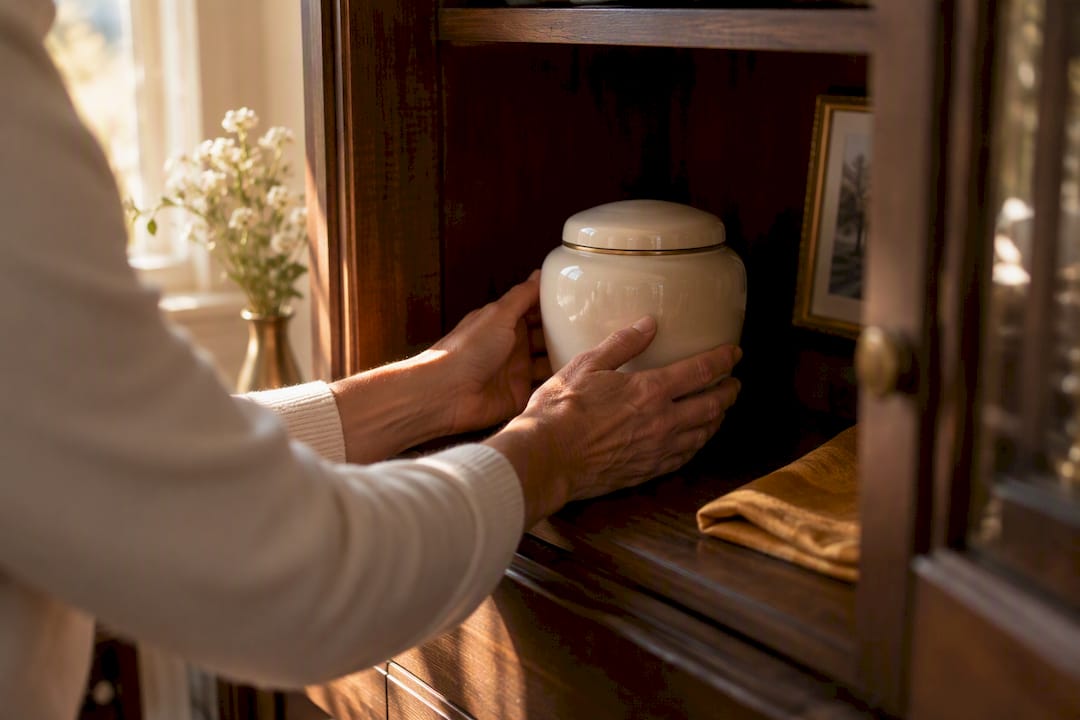
There is no single right answer for what to do with ashes, and no deadline to decide. Families generally choose from five paths: keeping ashes at home, burying or placing them in a cemetery, scattering on land or sea, turning a portion into a keepsake, or choosing an eco-friendly memorial. Cremated remains do not spoil or degrade, so you can take weeks or years, and even combine several options. The Cremation Association of North America (CANA) and the U.S. Environmental Protection Agency (EPA) both offer guidance worth knowing before you commit to anything permanent.
TL;DR:
- Burying or interring ashes in a cemetery offers a permanent, visitable location, but requires understanding cemetery rules and associated costs.
- Scattering ashes on land or sea is legal with permission and reporting, yet it is irreversible once performed, especially in ocean settings.
- Keepsakes like jewelry or glass art use only a small portion of ashes, making it easy to keep loved ones close without sacrificing the rest of the remains.
- Eco-options such as bio-urns or memorial reefs involve long lead times and permanence, suitable for families committed to environmental memorials.
- Safe storage at home is flexible and cost-effective, with decisions on permanent placement best made within the first year after death.
Table of Contents
- What Are Your Main Options for Cremation Ashes?
- Keeping Ashes at Home: Urns, Containers, and Safe Storage
- Can You Scatter Ashes Anywhere You Want?
- What Are the Options for Burying or Placing Ashes?
- What Keepsake Options Turn Ashes Into Something You Can Keep Close?
- Are There Eco-Friendly or Unusual Ways to Memorialize Ashes?
- What Should You Do First, and How Fast Should You Decide?
- How Bravo Family Mortuary Supports Families Through This Decision
- Are There Legal Rules for What You Can Do With Ashes?
- How Do Culture and Religion Shape What Families Choose?
- Editorial Perspective: What Actually Matters When Deciding What to Do With Ashes
- Local, Pressure-Free Help When You’re Ready
- Sources
- FAQ
What Are Your Main Options for Cremation Ashes?
Most families land on one option or blend two or three, and that’s normal. Here’s the quick lay of the land before you dig into details.
- Keep at home: Display in an urn or keepsake box. Low cost, no permits, always visitable.
- Bury or inter: Cemetery plot, columbarium niche, or urn garden. Costs vary widely but creates a permanent, documented location future generations can visit.
- Scatter: Land or sea, following permission and reporting rules. Free or low cost, but irreversible.
- Keepsakes: Jewelry, glass art, or memorial diamonds using a small portion of ashes. Ranges from $50 to several thousand dollars depending on the piece.
- Eco and specialty options: Bio-urns with tree plantings, memorial reef placement, or novelty send-offs. Costs and timelines vary by provider.
Many San Diego families we’ve worked with choose a layered approach: bury part of the ashes, scatter part at a meaningful location, and set aside a small portion for jewelry. There’s no rule against mixing these.
Keeping Ashes at Home: Urns, Containers, and Safe Storage
When ashes come back from the crematory, they typically arrive in a simple temporary container, usually a plastic or cardboard box. That’s fine for now, but many families eventually move ashes into a permanent urn made of wood, ceramic, metal, or marble, chosen to match the home or the person’s personality.
If you plan to divide ashes among family members or set some aside for keepsakes, only a small portion is needed. A tablespoon or two is plenty for a piece of jewelry or a small glass keepsake, while the bulk stays in the primary urn. Funeral homes can handle this division cleanly, which avoids spills and keeps the process dignified. CANA notes that families are never required to rush this decision and can store ashes securely for as long as they need.
- Store the urn in a stable, dry spot, away from direct sunlight, moisture, and areas pets or young children can reach.
- Label the container and keep the crematory paperwork with it, especially if ashes will later move to another family member.
- Basic urns are available at a range of prices; custom or artisan urns generally cost more.
Pro Tip: Take a photo of the urn and any identifying tag right after you receive it. If ashes are ever divided among relatives years later, that photo helps confirm which container is which.
Can You Scatter Ashes Anywhere You Want?
No. Scattering feels simple, but where you can legally do it depends on whether the land is private, public, or open water. Private land scattering requires the landowner’s permission, full stop. Public parks and national forests often allow scattering but may require a permit, so check with the park office first rather than assuming.
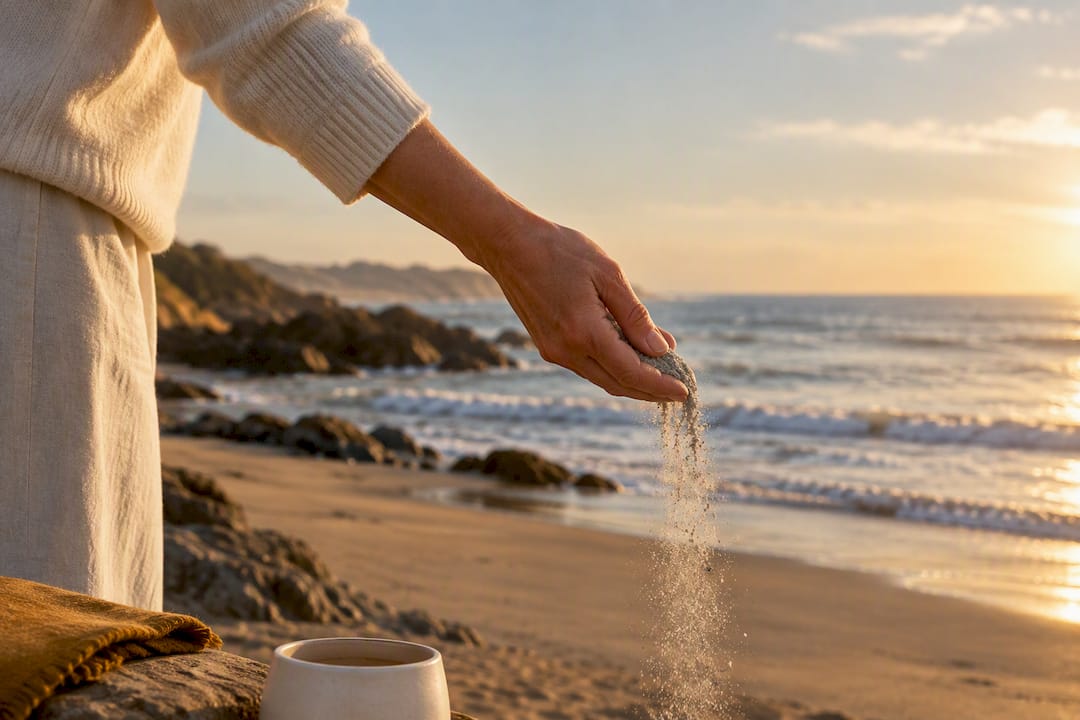
Sea scattering falls under EPA rules: burial at sea, including scattering, generally must happen a set distance from shore, and it needs to be reported afterward. Providers typically recommend a biodegradable urn designed to dissolve in water. Once ashes go into the ocean, they cannot be retrieved, which is worth sitting with before the day arrives.
A basic ceremony checklist helps avoid regrets:
- Check the wind direction and choose a low, gentle release rather than scattering into a headwind.
- Confirm who has decision authority over the ceremony and the ashes beforehand, so there’s no conflict in the moment.
- Keep a second sealed bag or container with a reserved portion if any family member wants a keepsake later.
- Bring only what you need. Leave no trash, flowers, or markers behind if the location requires leaving no trace.
If having a physical place to visit matters to your family, scattering alone won’t give you that. Pair it with a small marker, a plaque, or an urn burial elsewhere so there’s still a location to return to. San Diego families weighing scattering locations can find local specifics in our guide to scattering ashes in San Diego.
What Are the Options for Burying or Placing Ashes?
Interment gives you a fixed, visitable location, which matters to families who want somewhere to bring flowers on a birthday or anniversary. Three common formats exist.
- Columbarium niche: A small wall compartment designed specifically for urns, often with a nameplate. Compact and usually less expensive than a full grave.
- Urn burial in a family plot: Ashes go into a small plot, sometimes alongside a casketed relative in the same grave space.
- Urn garden: A dedicated cemetery section with ground markers, often more affordable than traditional burial sections.
Before buying anything, ask the cemetery two things: what urn dimensions their niches or plots accept, and what paperwork they require for interment. Some cemeteries also keep perpetual-care records, useful documentation for grandchildren who may want to locate the site decades from now. Interment costs vary by cemetery and format, so get a written quote before committing. Many families interring part of the ashes still set aside a smaller portion for jewelry or a home keepsake, since the two aren’t mutually exclusive.
What Keepsake Options Turn Ashes Into Something You Can Keep Close?
A small amount of ash goes a long way. Jewelry vials and lockets, glass art, memorial diamonds, and even ashes pressed into vinyl records or blended into paint for a commissioned portrait all use only a pinch, often less than a tablespoon per piece. That’s why most families keep a primary urn separately rather than using all the ashes for keepsakes.
- Jewelry vials or lockets: Small sealed compartments in a pendant or ring, often $50 to $200.
- Glass art: Ashes fused into blown glass, creating a marbled or swirled keepsake, typically $100 to $400.
- Memorial diamonds: Ashes compressed into a lab-created diamond, usually the most expensive option at $1,000 to several thousand dollars, with turnaround often taking several months.
- Vinyl records or custom art: Niche vendors press ashes into playable records or mix them into paintings, tattoos ink, or sculpture pieces.
Before ordering, ask any vendor how they sterilize equipment between clients and how they document custody of the ashes you send them. Reputable vendors will explain their process without hesitation.
Pro Tip: Ask for tracking on any shipment of ashes to a keepsake vendor, and request written confirmation when they receive it. A missing shipment of cremated remains is rare, but it’s not a risk worth taking.
Are There Eco-Friendly or Unusual Ways to Memorialize Ashes?
Bio-urns designed to biodegrade alongside a planted tree have become a popular eco-conscious option, letting a family grow something living from the memorial. Climate and soil matter here, so check which tree species suit your region before choosing this route.
Memorial reef programs mix ashes into a concrete reef ball that gets placed on the ocean floor, creating new marine habitat over time. These programs typically need months of lead time to build and place the structure, so this isn’t a next-week option.
- Bio-urns with tree planting: Biodegradable urn, tree sapling included, best suited to a family who can tend the site.
- Memorial reefs: Longer lead time, permanent ocean placement, appeals to families with a strong ocean connection.
- Specialty send-offs: Space flights carrying a small portion of ashes, or pyrotechnic scattering, exist but come at a premium price and limited availability.
Each of these is permanent and irreversible once completed, so weigh the environmental appeal against the finality before booking.
What Should You Do First, and How Fast Should You Decide?
There’s no clock running on this decision. A workable timeline looks like this: stabilize storage in the first few weeks, decide on a path over the following months, then finalize any permanent placement within the year if that’s the direction you choose.
- Right now: Store ashes in a safe, dry, stable spot. Confirm who in the family has decision authority, and keep the death certificate and cremation permit together with the container.
- In the coming weeks: Discuss options as a family without pressure. This is when division, keepsakes, or ceremony planning usually gets decided.
- Within the year: Finalize any permanent step, whether that’s cemetery interment, scattering, or a specialty memorial.
If you need to travel with ashes by air, use a container that’s X-ray transparent, wood or plastic rather than dense metal, since metal urns often trigger secondary screening or refusal at TSA checkpoints. For mailing ashes domestically, the United States Postal Service offers a free Cremated Remains Kit and requires Priority Mail Express. Most major private carriers won’t accept cremated remains at all.
When any of this feels like more than you want to manage alone, a funeral home can help with permits, division, or transport arrangements. That’s exactly the kind of task families ask us to take off their plate.
How Bravo Family Mortuary Supports Families Through This Decision
Bravo Family Mortuary is a family-owned, 5-star rated funeral home serving San Diego County around the clock, and we’ve guided plenty of families through exactly this kind of decision. We help with clean division of ashes among relatives, coordinate scattering permits, and work directly with cemeteries on interment paperwork so nothing falls through the cracks.
Everything can be arranged online through our secure PartingPros portal, day or night, with transparent pricing shown upfront. We serve Spanish speaking families with the same care, and we handle VA paperwork for veteran families at no extra charge. We are here whenever you are ready.
Are There Legal Rules for What You Can Do With Ashes?
Cremated remains are not classified as hazardous material, so you’re generally free to keep, transport, or place them as your family sees fit. But two situations carry real legal weight: scattering and burial.
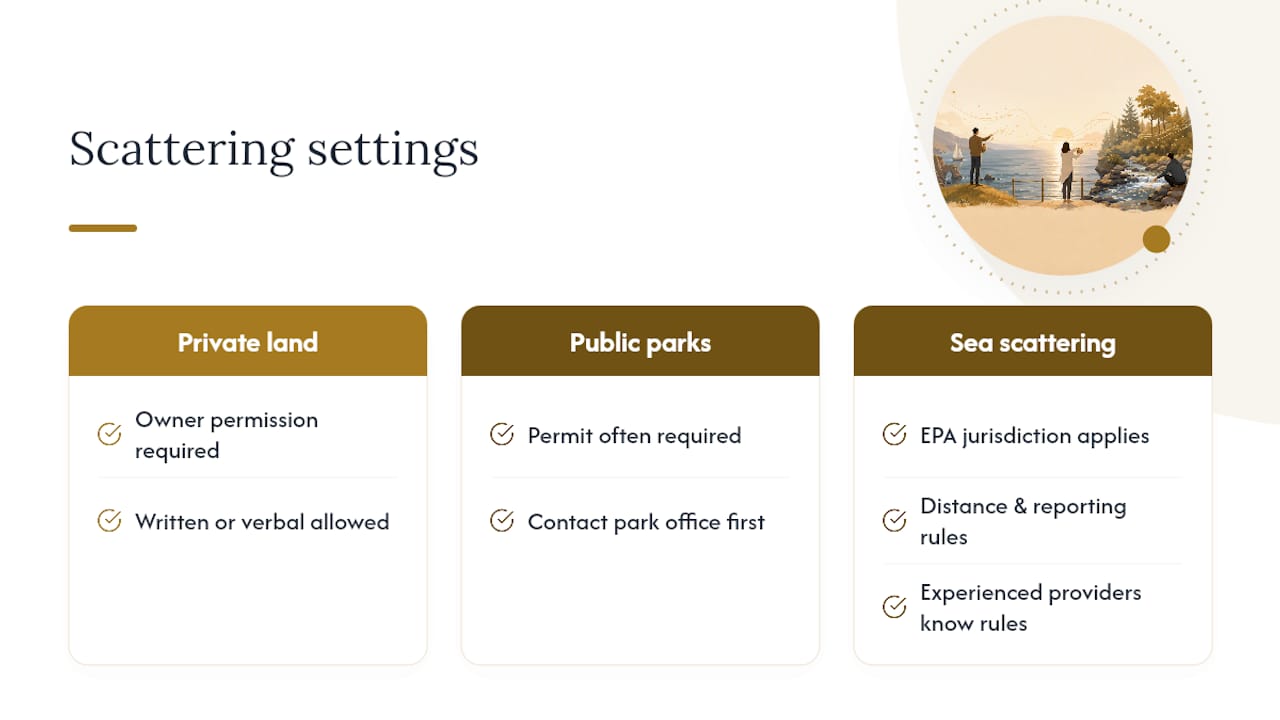
Scattering on private land requires the property owner’s written or verbal permission before you go. Public parks, national forests, and beaches often permit scattering but frequently require a permit application in advance, so contact the park office rather than guessing. Sea scattering falls under EPA jurisdiction, and providers who handle this regularly know the distance and reporting requirements involved. Skipping that reporting step isn’t just a technicality. It’s the difference between a lawful memorial and one that could create problems later.
Cemetery burial and columbarium placement come with their own paperwork trail: a death certificate, a cremation permit issued at the time of cremation, and often an interment authorization form from the cemetery itself. Keep copies of all of this together with the ashes, since future generations may need it to confirm identity or transfer ashes between locations.
If ashes will cross state lines or leave the country, check both the destination’s import rules and any airline or shipping carrier requirements before you travel. None of this needs to be figured out alone. A funeral home that handles cremation regularly can walk you through exactly which document goes where, and can often pull permits on your behalf so you’re not left calling multiple offices during an already hard week.
How Do Culture and Religion Shape What Families Choose?
Faith and family tradition often decide this question before logistics ever come up. Catholic teaching has historically favored burial or interment of ashes in a sacred place rather than scattering or keeping them at home indefinitely, though practice has grown more flexible in recent decades. Families navigating that balance may find our guide on Catholic cremation rules useful for understanding what’s generally accepted.
Hindu tradition often calls for scattering ashes in a river, historically the Ganges, though many Hindu families in the United States choose a local river or the ocean as a meaningful substitute. Buddhist practice varies by tradition and region, with some families scattering ashes and others keeping them at a home shrine. Jewish law traditionally favors burial over cremation entirely, though cremation has become more common among non-Orthodox Jewish families, who then typically choose burial of the ashes rather than scattering.
Many secular and blended families simply follow what the person requested before they died, or split ashes so each relative can honor the memory in their own way. There’s no universal rule here, and no obligation to follow a tradition that doesn’t fit your family. What matters is that whatever you choose feels honest to how that person lived and what your family believes.
Editorial Perspective: What Actually Matters When Deciding What to Do With Ashes
Most articles on this topic read like a menu, ten ideas, no order, no urgency guidance. That’s backwards. The real problem families run into isn’t a shortage of ideas, it’s not knowing which decisions are reversible and which aren’t.
Scattering is permanent the moment it happens. Interment is permanent once the paperwork clears. But keeping ashes at home while you decide? That costs you nothing and closes no doors. I’d argue the conventional advice undersells this: too many families feel pressure to choose fast, when the honest answer is that CANA’s own guidance backs waiting until you’re certain.
If I were prioritizing for a grieving family, I’d put safe storage first, decision authority second, and everything else, scattering, keepsakes, burial, third. Get the first two settled in the first few weeks. Everything else can wait months without cost or consequence. The families who regret their choice are almost never the ones who waited too long. They’re the ones who scattered before they were sure.
— Steve Olsher
Local, Pressure-Free Help When You’re Ready
You don’t have to sort through urns, permits, and scattering rules by yourself. Bravo Family Mortuary is the alternative to funeral providers that bury their pricing in fine print: every service, from direct cremation to a full memorial ceremony, is listed with transparent, all-inclusive pricing before you commit to anything.
If direct cremation is enough for your family, a simple cremation option is available, and if you’d like a service alongside it, there are memorial ceremony and traditional ceremony options. Current prices are available on the pricing page. We coordinate scattering permits, help divide ashes between relatives, and assist with VA paperwork for veteran families. Everything can be arranged securely online through PartingPros at any hour, and we serve San Diego County’s Spanish-speaking families with the same care as anyone else who calls us. Compare every option and price on our pricing page, or explore full cremation services when you’re ready to talk specifics. We are here whenever you are ready.
Sources
- Funeral
- What to Do With Cremation Ashes: Options & Ideas | RestDear
FAQ
What Does the Catholic Church Say About Keeping Ashes at Home?
Catholic teaching has traditionally preferred burying or entombing ashes in a sacred place rather than keeping them at home indefinitely or scattering them, though pastoral practice varies by diocese. Families weighing this question can find more detail in our guide to Catholic cremation rules.
Is There Any DNA Left in Cremated Ashes?
No. The cremation process reaches temperatures high enough to break down organic material and DNA entirely, leaving only bone fragments processed into what we call ashes. This is why cremated remains cannot be used for DNA testing or genetic identification.
How Long Do Ashes Last in an Urn?
Cremated remains do not decompose or degrade over time, so ashes stored properly in a sealed urn can last indefinitely, decades or even centuries. The urn’s material matters more than the ashes themselves. Keep it in a dry, stable spot away from moisture and temperature swings.
Is It Safe to Touch a Loved One’s Ashes?
Yes, cremated remains are safe to handle and are not a health hazard. Many families find it meaningful to hold or divide ashes themselves, though funeral homes can also assist with clean division if that feels easier during an already difficult time.