The Role of Funeral Home in Estate Settlement

A funeral home’s role in estate settlement is defined by three core functions: securing critical legal documents, coordinating notifications to government agencies, and ensuring funeral expenses are properly recorded for probate. Most families don’t realize how much of the early estate settlement process runs through the funeral home, not the attorney. From the moment a death occurs, the funeral director becomes one of the first professionals to take action on behalf of the family and the estate. Bravo Family Mortuary works with San Diego families every day to make sure that process is clear, organized, and as stress-free as possible.
What does a funeral home do in the estate settlement process?
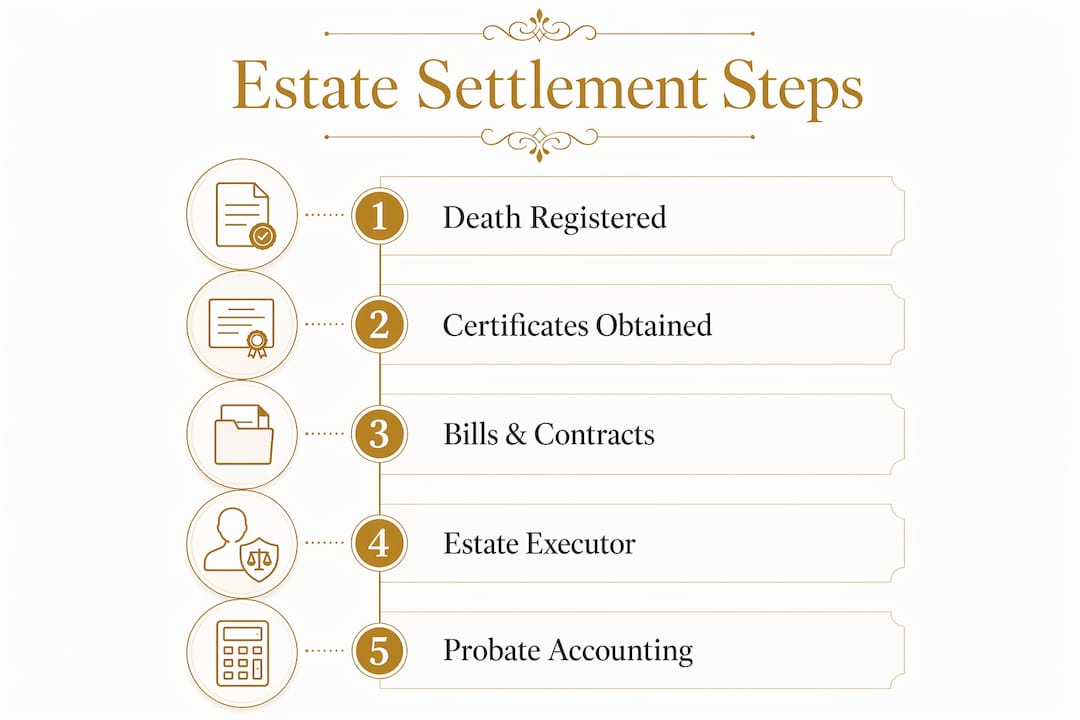
A funeral home provides the documentation and coordination that makes estate settlement possible. Without certified death certificates, banks won’t release funds, insurance companies won’t pay claims, and government agencies won’t update records. The funeral home is the professional responsible for obtaining those certificates and getting them into the right hands.
Funeral homes typically order at least 10 certified death certificates for complex estates involving banks, investment accounts, and government agencies. That number reflects the reality that nearly every institution involved in settling an estate requires its own original copy. Ordering too few is one of the most common and costly mistakes families make in the first week after a death.
Beyond certificates, funeral directors coordinate with medical examiners, hospitals, and county authorities to secure permits and authorizations required before any disposition can occur. They also notify the Social Security Administration and, when applicable, the Department of Veterans Affairs on behalf of the family. Modern funeral homes assist families with these administrative tasks as a standard part of their services, not as an add-on.
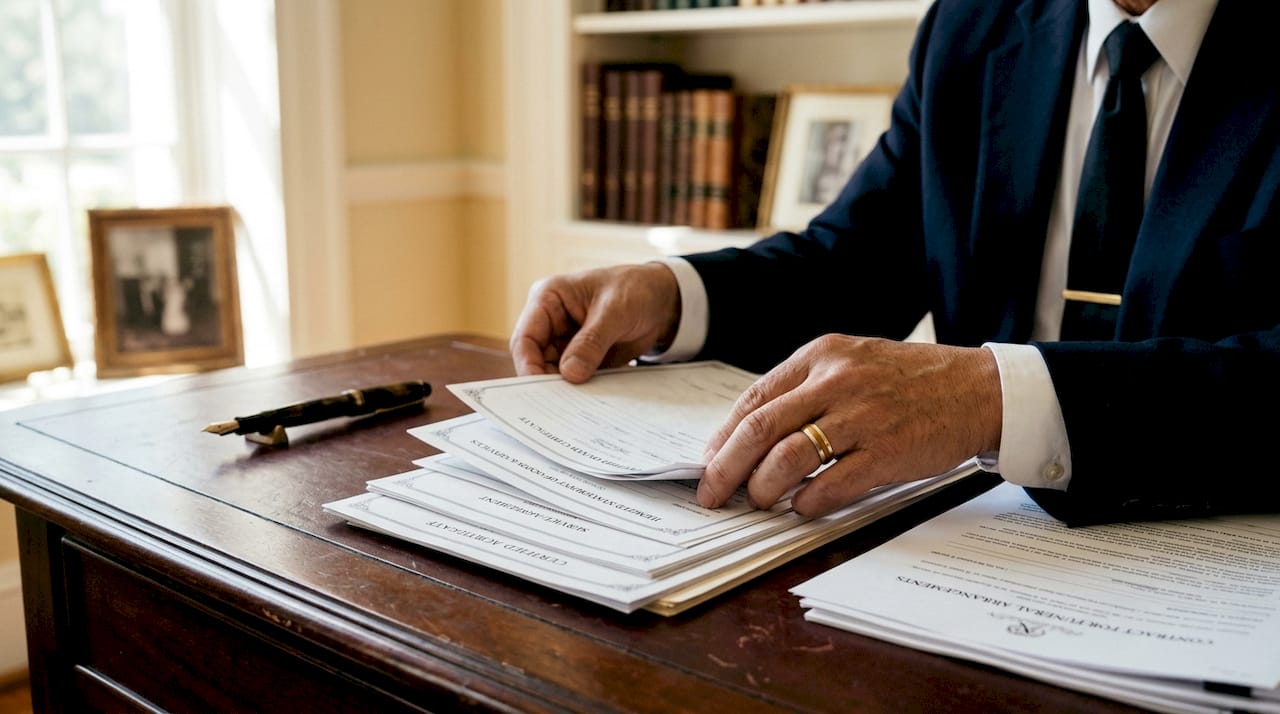
The funeral home also provides itemized bills, signed contracts, and receipts that the estate executor needs for probate accounting. These documents prove that funeral expenses were paid and allow the estate to reimburse the person who covered the costs. Keeping every piece of funeral paperwork organized from day one protects the family financially and legally.
Pro Tip: Ask your funeral home for a complete document package at the time of arrangement. This should include the itemized statement, the signed contract, and all receipts. Your executor will need these for probate.
How do funeral expenses affect the estate settlement process?
Funeral expenses are priority debts in probate and are typically among the first claims paid from estate assets, ahead of credit card companies and other unsecured creditors. This priority status exists because society recognizes that dignified burial is a fundamental obligation. It also means the estate, not the family personally, is expected to cover reasonable funeral costs.
Here is where families often get caught off guard: the person who signs the funeral contract is personally responsible for payment, regardless of whether the estate has funds available. The funeral home bills the contract signer directly. If the estate later reimburses that person through probate, that is a separate transaction. The funeral home does not wait for probate to close.
Probate can take months or even years to complete. That gap between paying the funeral bill and receiving reimbursement from the estate is a real financial pressure for many families. There are several ways to address this:
-
Pre-paid funeral plans lock in costs in advance, so no family member needs to pay out of pocket at the time of death.
-
Payable-on-death accounts allow estate funds to transfer directly to a named beneficiary without going through probate, making funds available quickly.
-
Veterans’ benefits can cover a portion of funeral costs for eligible veterans, reducing the family’s financial exposure.
-
Funeral assistance programs offered through state and county agencies may help families with limited resources.
-
Retaining all receipts allows the contract signer to file a formal claim against the estate for reimbursement during probate.
Executors must submit original funeral contracts and itemized invoices to document funeral expenses for probate accounting. If the executor was not the person who signed the contract, they may need court-issued Letters Testamentary to request those records from the funeral home. This is a detail that surprises many executors and can slow down the probate process if not addressed early.
Pro Tip: If you are the executor but not the person who signed the funeral contract, request a copy of all funeral documents immediately after the service. Do not wait until probate begins.
For very large estates, funeral expenses may be deductible for federal estate tax purposes on estates exceeding the federal exemption threshold. For most families, funeral costs function as a priority probate debt rather than a personal income tax deduction. Consult an estate attorney if you believe the estate may be subject to federal estate tax.
What legal nuances affect funeral authority and the executor’s role?
The executor of a will does not automatically control funeral arrangements. This surprises many families. Executors do not automatically have legal authority over disposition, and most states have a specific statutory order of priority that determines who makes those decisions. That order typically begins with a designated agent named in an advance directive, then a surviving spouse, then adult children, and so on.
This legal framework creates real-world complications when the executor and the next of kin are different people with different wishes. A funeral home navigates these situations regularly. The funeral director’s job is to identify who holds legal authority, honor that authority, and help the family reach agreement when possible.
Key legal points every family should understand:
-
Designated agent for disposition is the most reliable way to ensure your funeral wishes are honored. This is a separate legal document from a will.
-
The executor’s authority covers the financial and administrative aspects of the estate, not necessarily the funeral itself.
-
State laws vary significantly. California has specific statutes governing the order of priority for disposition decisions. What applies in one state may not apply in another.
-
Conflicts between family members over funeral decisions can delay arrangements and create legal complications. A funeral home can help mediate, but cannot override the legal order of priority.
-
Pre-planning with a funeral home resolves most of these conflicts before they arise by documenting your wishes in a legally recognized format.
Understanding how cash buyers handle probate homes offers a useful parallel: just as real estate transactions during probate require clear documentation of authority, funeral arrangements require the same clarity about who holds legal decision-making power.
How can families use funeral home services to ease estate settlement?
The families who navigate estate settlement most smoothly are the ones who treat the funeral home as a partner, not just a service provider. Funeral directors provide essential advocacy that helps families avoid unnecessary expenses and administrative errors during the earliest and most disorienting phase of grief. That advocacy has real financial value.
Aftercare services are one of the most underused resources available through funeral homes. Families should ask about aftercare early because it significantly eases the notification and estate settlement process. Aftercare typically includes help with SSA notifications, connections to grief counselors, and guidance on next administrative steps.
Here are practical ways to get the most from your funeral home during estate settlement:
-
Request aftercare services at the time of arrangement. Don’t wait until after the funeral to ask what support is available.
-
Ask for extra certified death certificates. Ten is a reasonable starting point for most estates. Complex estates with multiple accounts may need more.
-
Keep a dedicated folder for all funeral documents: the contract, itemized statement, receipts, and any correspondence with the funeral home.
-
Communicate with your executor early. Make sure the executor knows who signed the funeral contract and where the documents are stored.
-
Consider pre-planning your own funeral to remove this burden from your heirs entirely.
Transparent pricing is not just a convenience. It is a legal protection. When a funeral home provides a clear, itemized contract with no hidden fees, the executor has exactly what probate requires. Bravo Family Mortuary publishes all-inclusive pricing and provides complete documentation at every arrangement, whether families come in person or complete arrangements online through the PartingPros portal.
Pro Tip: Pre-planning your funeral is one of the most practical gifts you can give your family. It locks in pricing, documents your wishes legally, and removes a major financial and administrative burden from your estate.
Key Takeaways
A funeral home’s role in estate settlement begins immediately after death and directly shapes how smoothly probate proceeds.
| Point | Details |
|---|---|
| Documentation is the foundation | Funeral homes order certified death certificates and provide itemized records that probate requires. |
| Contract signer bears personal liability | The person who signs the funeral contract is personally responsible for payment, not the estate directly. |
| Executor authority has limits | Executors do not automatically control funeral decisions; legal priority order governs who decides. |
| Aftercare accelerates settlement | Requesting aftercare services early connects families with SSA notifications and estate guidance. |
| Pre-planning protects heirs | Pre-paid funeral plans eliminate upfront costs and resolve legal authority questions before death occurs. |
What I’ve learned about funeral homes and estate settlement
After years of working alongside families during some of the hardest weeks of their lives, I’ve come to believe that the funeral home is the most underestimated professional in the entire estate settlement process. Attorneys get the credit. Financial advisors get the calls. But the funeral director is the one who shows up at 2:00 AM, secures the death certificates, notifies Social Security, and hands the executor the documents they need to start probate.
The biggest mistake I see families make is treating the funeral arrangement as a one-time transaction. They sign the contract, hold the service, and walk away without asking what comes next. Then, three months later, the executor is scrambling to find the itemized invoice because the probate court requires it. That scramble is entirely avoidable.
My honest advice: have a direct conversation with your funeral director about estate settlement before the service ends. Ask specifically about aftercare, document copies, and SSA notification. A good funeral director will already be thinking about these things. A great one will have already started. The funeral and cremation services that serve families well are the ones that see their role extending beyond the ceremony itself, into the weeks and months of administrative work that follow.
— Steve Olsher
Bravo Family Mortuary is here to support your family through every step
When a loved one dies, the administrative weight of estate settlement arrives fast. Bravo Family Mortuary is a family-owned, 5-star rated funeral home serving all of San Diego County, 24 hours a day, 7 days a week. We provide complete documentation for probate, assist with SSA notifications, and offer transparent, all-inclusive funeral and cremation pricing with no hidden fees.

Families can complete arrangements entirely online through our secure PartingPros portal at any hour, without sales pressure or an in-person visit. We serve Spanish-speaking families with equal care and coordinate VA burial benefits paperwork for veteran families at no additional charge. Whether you are arranging services now or planning ahead to protect your heirs, we are here whenever you are ready.
FAQ
What does a funeral home do for estate settlement?
A funeral home secures certified death certificates, provides itemized billing for probate, and notifies government agencies like the Social Security Administration. These services form the documentary foundation that estate executors need to begin probate.
Who is responsible for paying funeral costs when someone dies?
The person who signs the funeral contract is personally responsible for payment, regardless of whether the estate has sufficient funds. The estate may later reimburse that person through the probate process.
Can an executor make funeral arrangements?
An executor does not automatically have legal authority over funeral decisions. Most states follow a statutory order of priority that begins with a designated agent for disposition, then a surviving spouse, then adult children.
How many death certificates does an estate need?
Ordering at least 10 certified death certificates is standard practice for estates involving multiple banks, insurance policies, and government agencies. Each institution typically requires its own original copy.
Are funeral expenses tax-deductible?
Funeral expenses are not deductible on a personal income tax return. They may be deductible for federal estate tax purposes on very large estates, and they are treated as priority debts in probate for most families.