
Por Que Preplanear Funeral en Vida: 2026 Guide
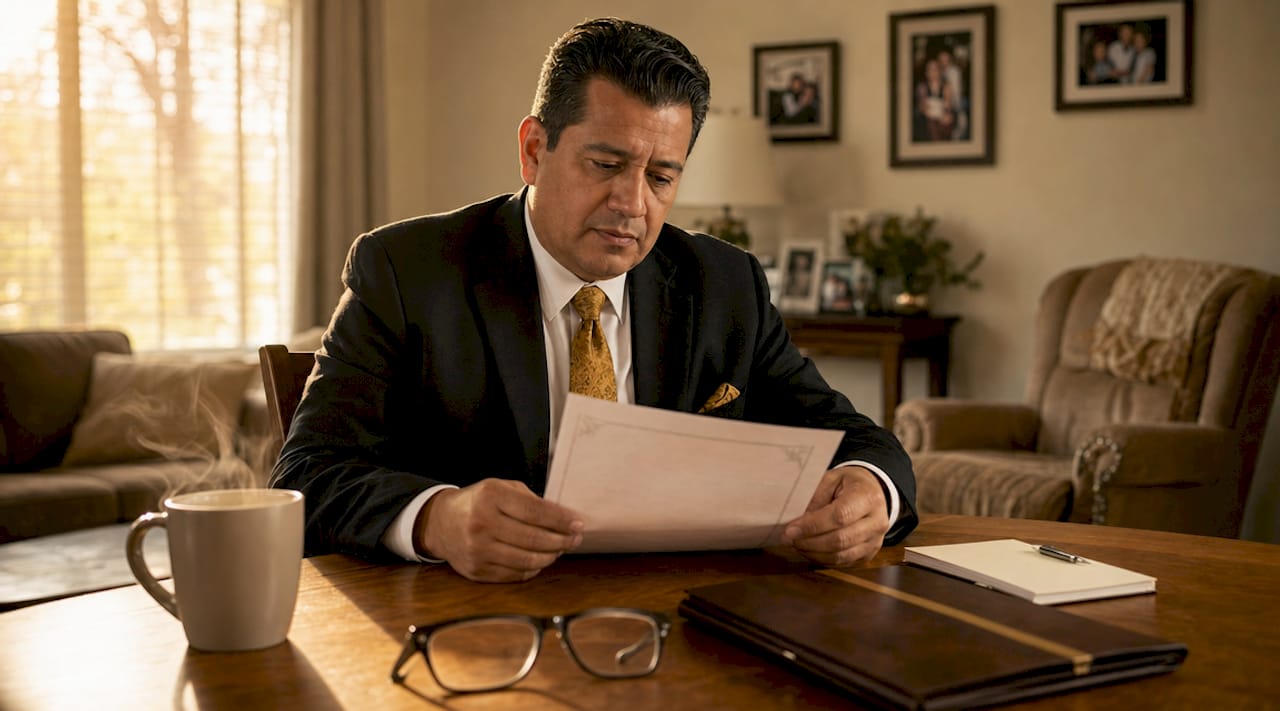
Funeral pre-planning, known in the industry as pre-need arrangement, is the process of documenting your funeral wishes while you are still alive so your family does not have to make those decisions under grief. Por que preplanear funeral en vida matters more than most people realize: fewer than 21% of Americans have done it, leaving families to navigate 60 to 100 decisions within 72 hours of a death. That is an enormous burden to place on people who are already grieving. Pre-planning is not a morbid exercise. It is one of the most loving and practical gifts you can give your family.
What are the benefits of pre-planning your funeral in life?
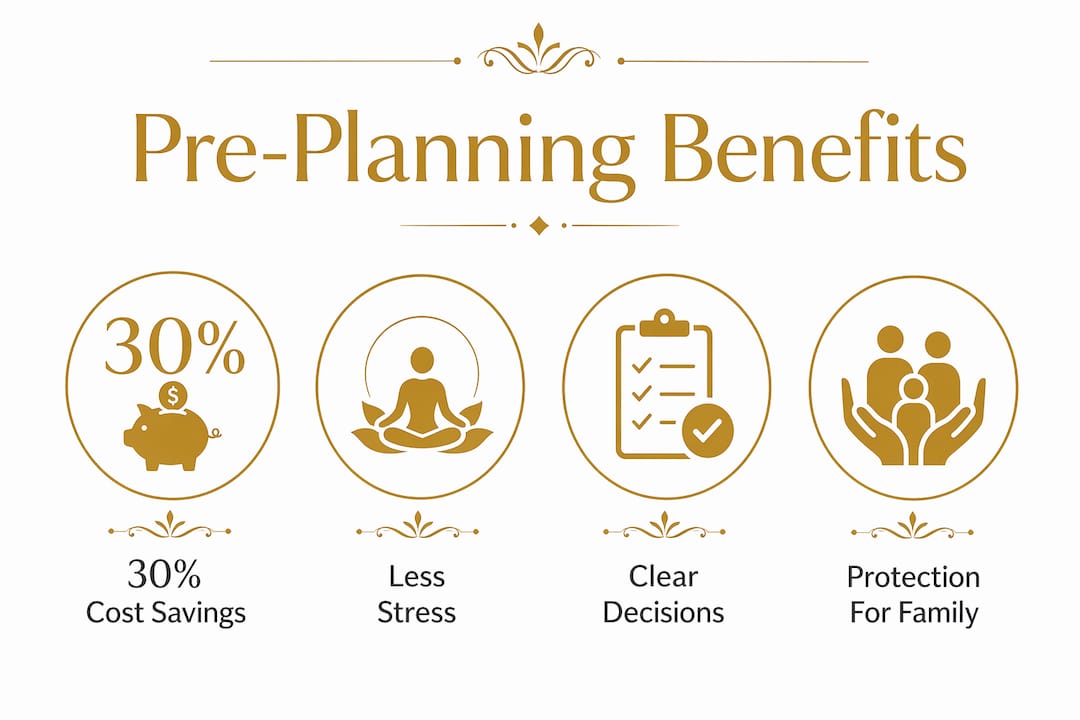
Pre-planning your funeral removes the guesswork from one of the most emotionally charged moments your family will ever face. When your wishes are documented, your loved ones spend their energy grieving and supporting each other, not debating casket choices or scrambling to find a funeral home at midnight. Pre-need planning removes subjective decision-making at death, enabling families to execute clear, documented wishes, which research links directly to reduced prolonged grief disorder.
The financial case is equally strong. Pre-planned funerals cost 20 to 30% less than at-need arrangements, with savings ranging from $3,000 to $10,000 by locking in today’s prices against 2 to 4% annual inflation. The median burial with viewing already exceeds $7,800 before cemetery fees, and that number rises every year. Locking in current pricing is not speculation. It is a straightforward financial protection.
Beyond money, the importance of funeral preplanning shows up in family dynamics. Without a documented plan, adult siblings often disagree on burial versus cremation, service style, or spending levels. Those disagreements can fracture relationships at the worst possible time. Pre-planning eliminates that conflict entirely because the decision has already been made by the one person with the authority to make it: you.
Here is a summary of the core funeral preplanning benefits:
- Emotional relief: Your family focuses on mourning, not logistics.
- Financial savings: Price locking protects against inflation and overspending.
- Conflict prevention: Documented wishes remove ambiguity and family disputes.
- Personal control: You choose the music, the readings, the type of service.
- Psychological peace: Pre-planning is a form of structured death acceptance that reduces anxiety for both you and your loved ones.
“Pre-planning shifts the burden from grieving families to the deceased, offering peace and reducing conflict during a vulnerable time.” — Newstrail
What steps are involved in planning your own funeral?
The process of planning your own funeral is more straightforward than most people expect. You do not need a lawyer or a large sum of money to start. A clear, written document covering your core preferences is enough to give your family meaningful guidance.
Follow these steps to build a complete pre-need plan:
- Choose your disposition method. Decide between traditional burial, direct cremation, aquamation (water cremation), green or natural burial, or body donation. Each carries different costs, environmental impacts, and religious considerations. Bravofamilymortuary offers all of these options in San Diego.
- Select your service type. Options include a traditional funeral with viewing, a memorial service after cremation, a celebration of life, or a graveside service. There is no single right answer. Choose what reflects your values and your relationship with your community.
- Document your personal preferences. Pre-writing your obituary and detailing preferences on music, speakers, readings, and flowers greatly eases the burden on your family. A funeral wishes document is typically one to three pages and covers burial versus cremation, service type, and provider choices.
- Choose a funeral home and compare prices. Not all providers offer transparent, all-inclusive pricing. Request a General Price List from any funeral home you consider. This is required by the FTC Funeral Rule.
- Decide on pre-payment. Pre-planning and pre-paying are separate decisions. You can document your wishes at no cost and choose to pre-pay later, or not at all.
- Store and share your plan. Storing funeral wishes in accessible but secure locations and sharing copies with designated family members or your executor is critical to prevent delays or confusion.
- Review your plan periodically. Life changes. Relationships, finances, and personal values shift over time. Revisit your plan every three to five years or after a major life event.
Pro Tip: Tell at least two people where your funeral wishes document is stored. A plan no one can find provides no protection.
How does funeral pre-planning affect costs and what payment options exist?
Understanding the financial side of funeral arrangement in advance helps you make decisions without pressure. The table below compares the two primary scenarios most families face.
| Factor | Pre-planned arrangement | At-need arrangement |
|---|---|---|
| Average cost savings | 20 to 30% lower | Full current market price |
| Decision timeline | Months or years | 72 hours under grief |
| Price protection | Locked at today’s rates | Subject to inflation |
| Family financial stress | Minimal, plan in place | High, often unexpected |
| Payment flexibility | Monthly plans available | Immediate payment expected |
Preplanning funeral costs does not require a large upfront payment. Monthly funeral payment plans typically range from $400 to $1,500 depending on the services selected. Funeral trusts, pre-need insurance policies, and prepaid contracts with a funeral home are the three most common prepayment vehicles. Each works differently in terms of how funds are held, what happens if you move, and how inflation is handled.
Funeral trusts hold your funds in a state-regulated account, offering some protection if the funeral home closes. Pre-need insurance pays a death benefit to the funeral home. Prepaid contracts lock in specific services at today’s prices, but the terms vary widely by provider. The key question to ask any provider is whether the contract is fully guaranteed, transferable to another funeral home, and refundable if your plans change.
Pro Tip: Request a written price guarantee before signing any prepaid contract. Verbal assurances are not enforceable.
What are common misconceptions and pitfalls in funeral pre-planning?
The most widespread misconception about funeral pre-planning is that it requires immediate payment. Pre-planning is simply documentation. Pre-paying is a separate financial decision you make only if it makes sense for your situation. You can complete a thorough, legally useful funeral wishes document at no cost whatsoever.
A second common mistake is assuming your family will remember your wishes from a conversation. Verbal instructions are easily forgotten, misremembered, or disputed. A written document, signed and dated, carries far more weight and provides clarity when emotions are running high.
Watch out for these additional pitfalls:
- Portability gaps: Some prepaid funeral plans lack portability, and contracts may not cover inflation fully. If you move to another city or state, your prepaid plan may not transfer without penalty.
- Regulatory variation: State laws governing prepaid funeral contracts differ significantly. California has consumer protections, but verifying the specific terms of your contract with the National Funeral Directors Association (NFDA) guidelines is still wise.
- Incomplete legal alignment: Your funeral wishes document is not a will and does not carry the same legal authority. Pair it with an advance directive and a durable power of attorney to create a complete end-of-life plan.
- Outdated plans: A plan written 15 years ago may reflect preferences that no longer apply. Review it regularly.
- Poor storage: A plan locked in a safe deposit box that your family cannot access immediately after your death defeats its own purpose.
How to start conversations with family about your funeral pre-planning?
Communicating funeral wishes openly with family reduces distress, and many family members feel relief and gratitude when they are included in the conversation. The discomfort most people feel about raising this topic is real, but it fades quickly once the conversation begins. The harder truth is that avoiding the conversation does not protect your family. It just transfers the difficulty to a moment when they are least equipped to handle it.
Use these approaches to open the discussion with care:
- Use a natural entry point. A news story about estate planning, a friend’s recent loss, or an upcoming birthday can all serve as low-pressure openings.
- Frame it as a gift. Tell your family you are doing this to protect them, not because you are expecting to die soon.
- Be specific. Vague statements like “I want something simple” leave room for interpretation. Say exactly what you mean: direct cremation, no viewing, a small gathering at home.
- Involve a professional. A funeral concierge service can guide families through planning, removing guesswork and reducing vulnerability during emotional conversations.
- Put it in writing immediately after the conversation. Memory is unreliable. Document what you discussed while it is fresh.
Pro Tip: If your family resists the conversation, share this fact: families without a pre-plan face 60 to 100 decisions in 72 hours. That single statistic often changes the tone of the discussion.
Key takeaways
Pre-planning your funeral is the single most effective way to protect your family from financial strain and emotional conflict after your death.
| Point | Details |
|---|---|
| Start with documentation | A one to three page written plan costs nothing and gives your family clear direction. |
| Lock in prices early | Pre-planned funerals save 20 to 30% compared to at-need arrangements made under pressure. |
| Separate planning from paying | You can document your wishes fully without committing to any prepayment. |
| Share and store your plan | Give copies to at least two trusted people and review the plan every three to five years. |
| Talk to your family now | Open conversations reduce grief-related stress and prevent disputes over decisions. |
Why I believe pre-planning is the most overlooked act of love
I have worked alongside families in some of their most difficult moments, and the pattern is consistent. Families who arrive with a documented plan from their loved one move through arrangements with a kind of quiet clarity. Families without one often spend the first hour in conflict, not because they do not love each other, but because grief amplifies every disagreement.
What strikes me most is how rarely people connect pre-planning with love. They see it as paperwork, or as something morbid to avoid. But when you sit down and write out your preferences, you are telling your family: I thought about you. I did not want this to be hard for you. That message lands. I have watched it land, and it changes the entire experience of loss for the people left behind.
The discomfort of planning your own funeral is real but brief. The relief it creates for your family lasts through the hardest days of their lives. If you are between 40 and 65 and you have been putting this off, the reasons to preplan a funeral in life are not abstract. They are personal, financial, and deeply human. The first step is simply writing down what you want. Everything else follows from there.
— David
Start your pre-planning with Bravofamilymortuary in San Diego
Bravofamilymortuary is a family-owned, 5-star rated funeral home serving all of San Diego County, 24 hours a day, 7 days a week. We offer transparent, all-inclusive pricing across every service type, from direct cremation and aquamation to traditional burial and green burial, with no hidden fees and no sales pressure.

Our bilingual team helps Spanish-speaking and English-speaking families alike document their wishes, compare options, and understand exactly what they are committing to before signing anything. You can begin your funeral pre-planning in San Diego entirely online through our secure PartingPros portal, at any hour, from the comfort of your home. To review our full service options or get a clear picture of current pricing, visit us online or call us directly. No obligation. No pressure. Just honest answers.
FAQ
What does funeral pre-planning actually involve?
Funeral pre-planning involves documenting your preferences for disposition method, service type, and personal details like music and readings in a written funeral wishes document. Pre-planning itself generally has no upfront cost unless you choose to pre-pay.
How much money can pre-planning save my family?
Pre-planned funerals cost 20 to 30% less than at-need arrangements, with potential savings of $3,000 to $10,000 by locking in current prices before annual funeral cost inflation applies.
Is pre-planning the same as pre-paying?
No. Pre-planning is documentation of your wishes and carries no cost. Pre-paying is a separate financial decision involving funeral trusts, pre-need insurance, or prepaid contracts, each with different terms and protections.
What happens to my prepaid plan if I move to another state?
Some prepaid funeral contracts lack portability, meaning they may not transfer to a new provider without penalties. Always verify transferability and refund terms in writing before committing to any prepaid arrangement.
Where should I store my funeral wishes document?
Store your document in a secure but accessible location, such as a home file or with your attorney, and give copies to at least two trusted family members or your executor so it can be found immediately when needed.