
How Online Funeral Payments Work: A Family Guide

You can pay or prepay most funeral costs online — the portal processes your card, ACH transfer, or assigned insurance proceeds and issues an itemized receipt so services can proceed or be reserved. Understanding how online funeral payment process works helps you move forward with confidence, even during one of the hardest moments your family will face.
Quick Answer
Online funeral payments let you settle or reserve services by authorizing a payment through a secure portal. The system records the transaction, generates an itemized receipt tied to the General Price List (GPL), and updates the funeral home’s account so arrangements can proceed.
- Who can pay: a family member, executor, or assigned insurance beneficiary
- Common payment methods: credit card, debit card, ACH/e-check, payment link, or insurance assignment
- Immediate outcomes: digital receipt, updated account balance, service confirmation or preneed funding
- Legal backdrop: the FTC Funeral Rule requires funeral homes to provide itemized pricing before you pay anything
- At Bravo Family Mortuary, families complete arrangements through the secure PartingPros portal at any hour, with bilingual Spanish support and transparent, all-inclusive pricing
Table of Contents
- How the online funeral payment process works, step by step
- What online payment methods are available to you
- How preneed (prepaid) funeral plans are funded
- How a life insurance assignment works
- Consumer protections you should know about
- Practical tips for splitting payments, collecting contributions, and keeping records
- How Bravo Family Mortuary handles online payments and pre-planning
- Key Takeaways
- Bravo Family Mortuary’s online pre-planning and payment options
- Useful sources and where to verify official rules
How the online funeral payment process works, step by step
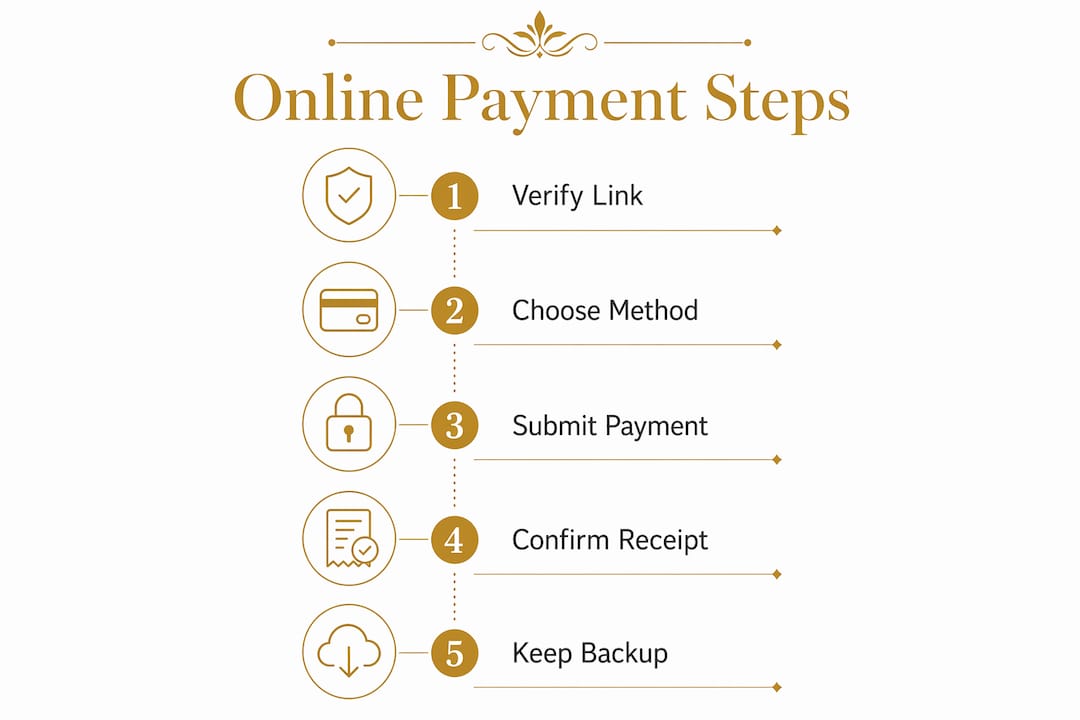
Online funeral payment portals let families settle invoices 24/7 using credit cards, debit cards, or ACH, provide real-time balance updates, generate digital receipts, and consolidate payment history to reduce paperwork. Here is the exact sequence you will move through:
- Invoice generation. The funeral coordinator builds your itemized invoice from the GPL, listing every service and merchandise charge separately. You have the right to see this before paying anything.
- Portal link or login. You receive a secure, unique link by email or text, or you log into the funeral home’s client portal directly. At Bravo Family Mortuary, this is the PartingPros portal, accessible 24/7 with bilingual prompts.
- Review the invoice. Inside the portal, you see each line item, subtotals, and any applicable fees. Take time here — compare every charge against the GPL you were given.
- Choose your payment method. Select credit/debit card, ACH/e-check, or indicate you are submitting an insurance assignment. Split-payment options let multiple family members contribute.
- Enter payment details or upload assignment paperwork. Card payments are tokenized for security. For insurance assignments, the portal typically includes a secure document upload area for your policy copy and signed assignment form.
- Authorize payment. You confirm the total and submit. The payment gateway encrypts the transaction and routes it to the processor.
- Receive confirmation and receipt. An itemized receipt arrives by email immediately for card and ACH payments. It ties back to your GPL and case file.
- Funeral home posts payment and schedules services. Behind the scenes, the payment reconciles automatically to the case management system. Modern payment processors use tokenized card storage and automatic reconciliation to case files, which means the funeral home can confirm your service date without waiting for manual bookkeeping.
Timing matters. Card authorizations and ACH submissions are near-instant, though ACH funds typically settle within 1–3 business days. Insurance assignments can take considerably longer — plan for that gap.
Pro Tip: If a card payment fails, do not attempt it multiple times before calling the funeral home. A failed authorization can temporarily hold funds on your card. Call the funeral home directly, confirm the portal link is from their official domain, and try a different card or ACH as a backup.
What online payment methods are available to you
Families have more options than most realize. Each method carries different timing, fees, and practical tradeoffs.
| Payment Method | Typical Processing Fee | Clearing Time | Best Use Case | Refund Complexity |
|---|---|---|---|---|
| Credit card | ~2–3% of transaction | Instant authorization | At-need, urgent payment | Moderate (chargeback window applies) |
| Debit card | ~1–2% of transaction | Instant authorization | At-need, lower fee preference | Moderate |
| ACH / e-check | Lower than cards | 1–3 business days | Larger balances, preneed deposits | Lower (no chargeback; bank reversal only) |
| Payment link (email/text) | Varies by processor | Instant to 1–3 days | Split payments, remote family | Moderate |
| Insurance assignment | No direct fee to family | 10–60 business days | Preneed or at-need with existing policy | Complex (insurer-dependent) |
| Crowdfunding / third-party platforms | Platform fee varies | Days to weeks | Supplemental contributions | Higher (platform policies vary) |
A few things worth knowing about each method:
- Credit card chargebacks can complicate funeral home reconciliation. Some homes add a convenience fee for cards; ask before you pay.
- ACH return windows typically run 2–5 business days. If an ACH is returned for insufficient funds, the funeral home may require a different payment method before releasing services.
- Crowdfunding platforms can speed collections but add platform fees and processing delays. Treat them as supplemental, not primary.
- Split payments via secure payment links let multiple relatives contribute directly, which reduces the burden on one payer and simplifies reconciliation against a single invoice.
- Insurance assignments are conditional. The funeral home verifies policy status and requires signed paperwork before accepting an assignment as payment.
For families considering final expense insurance as a funding vehicle, understanding how the assignment process works before a death occurs makes everything smoother when the time comes.
How preneed (prepaid) funeral plans are funded
Prepaying a funeral is one of the most practical gifts you can leave your family. There are two main funding structures, and the difference between them affects portability, refunds, and what happens if you change your mind.

Trust-funded preneed contracts
You sign a contract describing the services you want, then deposit funds into a trust administered by the funeral home or an independent trustee. Under California law (BPC 7735), all money paid must be held in trust until the contract is fulfilled. If you cancel, you are entitled to a refund of the principal plus interest, minus a revocation fee capped at ten percent of the original contract amount — and that fee can only come from trust earnings, not your principal.
California’s Cemetery and Funeral Bureau stresses that fully funded, detailed preneed instructions generally cannot be altered by survivors after death. That protection is the point: your wishes are locked in.
Insurance-funded preneed contracts
Here, a life insurance policy or funeral insurance product funds the contract. The policy face value is matched to the estimated funeral cost. If the costs are guaranteed in the contract, the insurance should cover all expenses. If they are not guaranteed, your survivors may need to pay any difference.
Before choosing either path, California’s preneed guidance recommends confirming whether funds go to a trust or an insurance product, because cancellation and refund formulas differ and portability to another funeral home is not guaranteed without paperwork.
| Feature | Trust-funded preneed | Insurance-funded preneed |
|---|---|---|
| Portability | Possible, but requires paperwork | Often limited by policy terms |
| Refund on cancellation | Principal + interest minus capped fee | Depends on policy surrender value |
| Contestability risk | Low | Possible during contestability period |
| Price guarantee | Available if contract states it | Available if contract states it |
| Who holds funds | Independent trustee or funeral home trust | Insurance carrier |
Before you sign any preneed contract, verify:
- Whether prices are guaranteed or subject to adjustment at time of need
- The cancellation clause and exact refund formula
- Who holds the funds and how to contact them
- What happens if the funeral home closes or changes ownership
- Whether the arrangement can transfer to another provider if you move
How a life insurance assignment works
A life insurance assignment lets a beneficiary authorize an insurer to pay some or all of a death benefit directly to the funeral home. The home verifies policy status and requires signed assignment paperwork before accepting it as payment.
The step-by-step checklist:
- Verify the policy is active and in good standing
- Gather a copy of the policy and beneficiary information
- Sign the funeral home’s assignment authorization form
- Submit the claim package to the insurer (policy copy, death certificate, assignment form, funeral home invoice)
- The funeral home monitors the claim and applies proceeds to your invoice once the insurer releases funds
Timing reality: insurance assignments typically take anywhere from 10 to 60 business days, depending on the insurer, the completeness of documentation, and whether the policy is within its contestability period. Policies less than two years old may face additional review.
Not all policies qualify. Insurers commonly require an active policy with a proper beneficiary designation. Assigning only a portion — “up to” the funeral cost rather than the full benefit — preserves residual proceeds for other beneficiaries and is often processed more smoothly.

Treat an insurance assignment as conditional payment pending claim approval, and keep a backup payment method available. Service scheduling should not wait on an unconfirmed assignment. For families exploring life insurance options to fund future arrangements, understanding these mechanics before a policy is purchased makes the assignment process far less stressful.
Consumer protections you should know about
The law gives you real protections when paying for funeral services, whether you are settling an at-need bill or signing a preneed contract.
FTC Funeral Rule (federal):
- Funeral homes must give you an itemized General Price List before you select any goods or services
- You have the right to choose only the items you want — no package bundling required
- Telephone price disclosure is required if you ask
- You must receive an itemized statement of goods and services before payment is accepted
California preneed protections (example state guidance):
- All preneed funds must be held in trust until the contract is fulfilled, per BPC 7735
- Cancellation entitles you to principal plus interest, minus a revocation fee capped at ten percent of the original contract amount
- The revocation fee may only be taken from trust earnings, never from your principal
- Funeral homes must present a copy of any preneed agreement in their possession when arrangements are being made
Medicaid note: prepaying for a funeral can affect Medicaid eligibility in some states, depending on how the prepaid contract is structured. Consult a benefits advisor before funding a preneed contract if Medicaid eligibility is a consideration for you or your family member.
What to request in writing before signing:
- The cancellation clause and exact refund formula
- The trustee’s name and contact information
- A written estimate of any costs not covered by the preneed contract
- Confirmation of whether prices are guaranteed
- Copies of all receipts and the signed contract
Understanding transparent funeral pricing before you commit to any contract helps you spot unexpected charges and ask the right questions.
Documents funeral homes typically ask for and what to expect after payment
Being prepared with the right paperwork prevents delays and keeps services on schedule.
Documents you will typically need:
- Itemized General Price List (provided by the funeral home)
- Signed service agreement or preneed contract
- Government-issued photo ID for the person making arrangements
- Death certificate (certified copies — usually multiple)
- Proof of insurance (policy copy) if using an assignment
- Signed assignment or authorization forms
- Payment receipts and confirmation emails
Typical timing after payment:
- Card or ACH payment: confirmation arrives instantly; funds settle within 1–3 business days; services can typically be scheduled immediately
- Insurance assignment: documentation submitted; funeral home monitors claim; expect 10–60 business days for funds to clear; services may proceed with a backup payment or at the funeral home’s discretion
- Preneed trust deposit: funds are placed in trust; confirmation issued; services are reserved per the contract terms
When submitting documents online, use the portal’s secure upload area rather than standard email. Ask the funeral home to confirm receipt of every document. If any paperwork is missing, request a specific list in writing so nothing falls through the cracks. Families navigating the virtual arrangement process for the first time often find that having a checklist like this makes the experience far less stressful.
Transaction fees, refunds, and how charges appear on your invoice
Payment processing costs are real, and how they are handled varies by funeral home.
How fees typically work:
- Credit and debit card transactions carry a merchant processing fee, usually a percentage of the transaction plus a small fixed amount per transaction
- ACH transfers carry lower fees than cards, making them a practical choice for larger balances
- Crowdfunding and third-party platforms add their own platform fees on top of payment processing, which can reduce the net amount the funeral home receives
- Some funeral homes absorb processing fees; others pass them through as a line item on the invoice — ask before you pay
Refund mechanics:
- Refunds are generally issued to the original payment method
- Card refunds typically appear within 5–10 business days depending on your bank
- ACH refunds may take a similar window; there is no chargeback mechanism, so disputes go through the bank directly
- Preneed trust refunds follow the contract’s cancellation formula: principal plus interest minus any allowable revocation fee
- If you see an unexpected charge on your invoice, request a written explanation tied to the GPL before paying
Knowing how to compare funeral home prices and read an itemized statement helps you catch discrepancies early.
Risks to watch for and safer alternatives
Online payments and preneed contracts are generally safe, but a few specific risks deserve attention.
Risks to be aware of:
- Insurance contestability: policies less than two years old may be contested by the insurer, delaying or reducing the payout
- Policy ineligibility: not every policy qualifies for direct assignment; verify eligibility before relying on it as your primary payment method
- Provider insolvency or closure: if a funeral home closes, portability of your preneed contract depends on the contract terms and state law
- Phishing and scam payment links: fraudulent links mimicking funeral home portals do exist; always confirm the link originates from the funeral home’s official domain or call to verify
- Chargeback disputes: disputing a card charge after services have been rendered creates legal and financial complications for your family
Safer paths:
- Use a trust-funded preneed contract with a clear cancellation clause and a named independent trustee
- Keep a separate payable-on-death (POD) bank account designated for funeral expenses as a backup
- Use partial insurance assignments (“up to” the funeral cost) rather than assigning the full policy benefit
- Verify any portal by calling the funeral home directly and checking for a secure (HTTPS) domain
- Choose a local provider with transparent, published pricing — like Bravo Family Mortuary — where you can confirm every charge against the GPL before paying
For questions about what to ask before paying online, Bravo’s guide to questions for funeral homes covers the verification steps in detail.
Practical tips for splitting payments, collecting contributions, and keeping records
These steps apply whether you are paying now or coordinating contributions from family members across the country.
- Use payment links to split costs. A secure payment link can be sent to each contributing family member so everyone pays their share directly, reducing the burden on one person.
- Require each contributor’s name. Ask the funeral home to note each payer’s name on the reconciliation record so the invoice reflects who paid what.
- Request a separate receipt per payer. Each person who contributes should receive their own itemized receipt for their records.
- Screenshot confirmation pages. Before closing the browser, capture the confirmation screen. Email receipts can be delayed or filtered; a screenshot is an immediate backup.
- Save the itemized GPL and signed contract. Keep physical and digital copies. Do not store the only copy in a safe-deposit box — your family may need access on a weekend or holiday when the bank is closed.
- Reconcile multiple transactions against one invoice. Ask the funeral home to provide a running balance statement showing each payment applied, so you can confirm the account is settled before services conclude.
Pro Tip: Before entering any payment details, confirm the portal link with the funeral home by phone. Look for a secure HTTPS domain. Then request an itemized emailed receipt tied to the GPL after payment — not just a generic “payment received” confirmation. That receipt is your legal record.
How Bravo Family Mortuary handles online payments and pre-planning
Bravo Family Mortuary’s online workflow is built around one principle: no family should have to navigate payment confusion during an already difficult time. Here is how the process works in practice.
The Bravo online arrangement and payment workflow:
- A family contacts Bravo Family Mortuary — by phone, online, or through the PartingPros portal — at any hour, any day
- A licensed funeral director reviews the family’s needs and generates an itemized invoice based on Bravo’s published GPL, with all-inclusive pricing and no hidden fees
- The family receives a secure PartingPros portal link with bilingual (English and Spanish) prompts
- Inside the portal, the family reviews the itemized invoice, selects a payment method (card, ACH, or insurance assignment), and authorizes payment
- For preneed arrangements, families can fund via trust deposit or submit insurance assignment paperwork through the secure upload area
- An itemized receipt is issued immediately and reconciled to the Bravo case file
- For veteran families, Bravo coordinates VA burial benefits paperwork at no additional charge, and those benefits can be applied to reduce the balance before final payment
Bravo’s preplanning page walks families through the preneed options available and how to start the process entirely online.
With 47-plus five-star Yelp reviews and bilingual support for Spanish-speaking families across San Diego County, Bravo Family Mortuary’s online process reflects what families consistently say they want most: transparency, flexibility, and dignity at every step.
Key Takeaways
Online funeral payments work best when you verify the portal, request an itemized GPL before paying, keep a backup payment method alongside any insurance assignment, and save every receipt and contract copy.
| Point | Details |
|---|---|
| Verify before you pay | Confirm the portal link with the funeral home by phone and check for a secure HTTPS domain before entering payment details. |
| Request an itemized GPL | The FTC Funeral Rule requires itemized pricing before payment; always compare your invoice line by line against the GPL. |
| Insurance assignments take time | Assignments typically take several business days to clear; keep a backup payment method so services are not delayed. |
| Know your preneed refund rights | Under California law, canceling a preneed trust entitles you to principal plus interest, minus a revocation fee that is capped by law. |
| Bravo Family Mortuary | Offers 24/7 online arrangements via PartingPros, transparent all-inclusive pricing, bilingual support, and insurance assignment assistance for San Diego families. |
A funeral director’s perspective on getting this right
Families often tell me that the payment part of funeral arrangements feels like the last thing they want to think about. That is completely understandable. What I have seen, though, is that the families who feel most at peace afterward are the ones who took a few minutes to read the itemized statement, asked one or two direct questions about refund terms, and kept a copy of everything. Not because they were suspicious — but because having that paperwork means they never have to wonder later.
At Bravo Family Mortuary, we will never pressure you to decide quickly or pay before you are ready. Our portal is available whenever you are, in English or Spanish, and we are a phone call away if anything is unclear. If you are a veteran’s family, we handle the VA paperwork at no charge. If you need to split payments among siblings, we make that straightforward. The goal is always the same: you should leave this process feeling cared for, not confused.
Bravo Family Mortuary’s online pre-planning and payment options
Transparent pricing is Bravo Family Mortuary’s sharpest difference from funeral homes that bury costs in packages. Every service — direct cremation, aquamation, traditional burial, green burial, celebration of life, and veteran services — is listed with all-inclusive pricing on Bravo’s pricing page, so you know the full cost before you commit to anything.

Starting online takes minutes. Visit Bravo’s preplanning page to begin a preneed arrangement, or call to speak with a bilingual funeral director who can walk you through the PartingPros portal, explain your payment options (card, ACH, or insurance assignment), and answer every question about refunds, portability, and what happens next. Bravo serves all of San Diego County, 24 hours a day, 7 days a week.
We are here whenever you are ready.
Useful sources and where to verify official rules
These sources let you confirm legal requirements and operational details directly, rather than relying on any single provider’s description.
- FTC Funeral Rule — Federal consumer protection requirements for itemized pricing and your right to choose individual services. Authoritative for all U.S. families.
- California Cemetery and Funeral Bureau — Consumer Guide — Covers prepayment options, trust rules, refund rights, and what to verify before signing a preneed contract. California-specific but a useful model for understanding state-level protections.
- California BPC 7735 — The statutory text governing preneed trust requirements and revocation fee limits in California.
- California Cemetery and Funeral Bureau — Preneed Q&A — Plain-language answers to common preneed questions, including portability and cancellation terms.
- Texas Prepaid Funeral Contract Regulation — State-level regulatory body for prepaid funeral contracts in Texas; useful if you are comparing state approaches.
- VA Burial Benefits — Official VA guidance on burial and memorial benefits for veterans and their families.
- Bravo Family Mortuary — Preplanning — Local context for how online preneed arrangements work in San Diego, including portal access and payment options.
This article is general information, not legal or financial advice. Preneed laws, Medicaid rules, and insurance assignment requirements vary by state and individual circumstance. Confirm current rules with your state’s funeral regulatory bureau or a qualified professional before signing any contract.