
Order 8 to 12 Certified Death Certificates: Step by Step Checklist

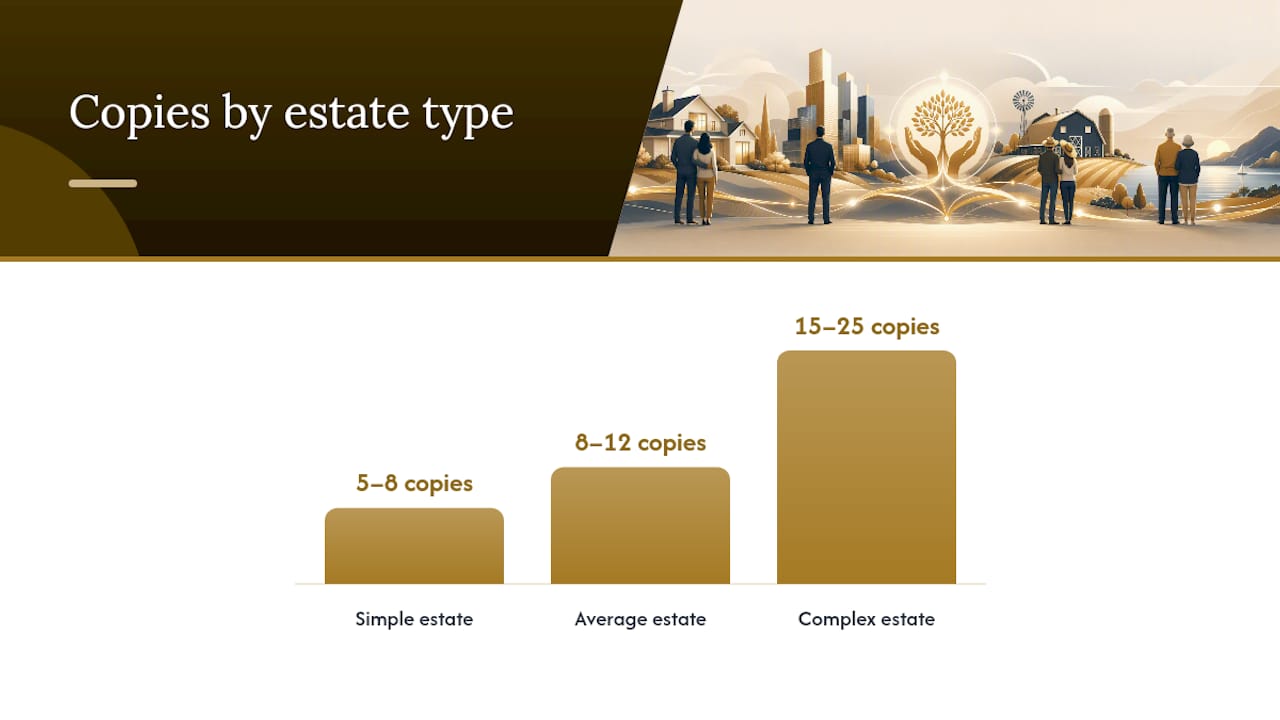
Order 8 to 12 certified death certificates as your practical starting point, and plan for more if the estate includes multiple properties, business interests, or out-of-state accounts. That range covers a standard list of banks, insurers, and government agencies, plus a small buffer. Simple estates with one bank account and no real property can often get by with 5 to 8 copies, while complex estates may need 15 to 25 or more.
TL;DR:
- Ordering 8 to 12 certified death certificates generally covers an average estate with multiple accounts and property, including some buffer copies.
- Most institutions require an original certificate for closing accounts, transferring property, or claiming benefits, and confirm whether they accept copies or PDFs beforehand.
- Long form certificates are necessary for life insurance claims or probate, while short forms usually suffice for vehicle titles and property transfers; verify what’s needed.
- Small estate affidavits can reduce the number of required copies for estates below specific state thresholds, potentially avoiding the need for multiple originals.
- Reordering copies later can delay estate settlement and cost more; store originals securely and confirm institution requirements for scanned copies to avoid delays.
Table of Contents
- Who Requests a Certified Copy? Institution Checklist
- A Quick Step-by-Step Method to Estimate How Many Copies to Order
- How to Obtain Certified Copies, Costs, and Processing Time
- Short Form vs. Long Form Certified Copies: Which to Order
- State Variations, Small-Estate Alternatives, and Special Cases
- Practical Tips: Ordering Enough, Storing Originals, and What To Do If You Need More
- A Funeral Director’s Honest Take on Ordering Certified Copies
- How We Can Help With Certified Copies and Next Steps
- Sources
Who Requests a Certified Copy? Institution Checklist
Every certified copy you order should have a job to do. Before you place an order, walk through the institutions your loved one dealt with and match each one to a copy, because most financial and legal institutions keep the original permanently rather than handing it back once an account closes.
Here’s the checklist most families work through:
- Banks and credit unions — one certified copy per institution to close accounts or release funds to beneficiaries.
- Life insurance companies — one copy per policy, since insurers typically retain the original as part of the claim file.
- Social Security Administration — usually handled through the funeral home’s electronic reporting, but a copy may still be requested for survivor benefits.
- The county recorder or assessor’s office — needed to transfer real estate title, especially for property held in the deceased’s name alone.
- The Department of Motor Vehicles — required to transfer or cancel vehicle titles and registration.
- Probate court — the estate’s attorney or personal representative will need copies to open and close probate.
- Retirement accounts and pension administrators — each plan administrator generally wants its own original.
- The Department of Veterans Affairs — for burial benefits, survivor pensions, or dependency claims tied to military service.
A few institutions accept a plain photocopy or scanned PDF, particularly for smaller accounts or informational requests. But don’t assume that’s the case. Ask directly, and get the answer in writing before you decide you can skip ordering an extra original.
A Quick Step-by-Step Method to Estimate How Many Copies to Order
Counting copies doesn’t have to be guesswork. Walk through this short process and you’ll land on a number that fits the actual estate, not just a generic average.
- List every institution and asset that needs an original. Write down each bank, insurer, retirement account, property, and vehicle title tied to the deceased.
- Count that list. This is your baseline number, one certified copy per line item.
- Add 2 to 3 spare copies. This is the buffer ProbatePedia and other estate resources consistently recommend, since unexpected requests come up more often than families expect.
- Match your total to a preset if you want a sanity check:
- Simple estate (one bank, no property, no probate): 5 to 8 copies
- Average estate (a home, a couple of accounts, life insurance): 8 to 12 copies
- Complex estate (multiple properties, business ownership, probate): 15 to 25 copies
Here’s a worked example. Say your mother had one bank account, one life insurance policy, a house in her name, a car, and a pension. That’s five line items. Add three spares, and you land on eight, right at the low end of the average range.
Pro Tip: Order all your copies in a single request instead of ordering a few now and more later. Most vital records offices charge the same processing fee whether you request one copy or ten, so batching saves you money and weeks of waiting.
How to Obtain Certified Copies, Costs, and Processing Time
You have two main paths to a certified death certificate, and the right one depends on how soon you need copies in hand.
Through a funeral director. A funeral director can order initial certified copies for the family as part of registering the death, which is usually the fastest and least stressful option during the first days after a loss. This is also often the moment families place their full order, covering the checklist from the previous section in one request. Our guide on how to get a death certificate in San Diego walks through that local process step by step.
Directly from vital records. If you need copies later, or the funeral home didn’t handle the original order, you’ll request them from the county recorder or state vital records office where the death was registered.
- Per-copy fees typically run in the range most county offices publish on their fee schedules, with modest savings per copy when ordering in bulk.
- Processing usually takes anywhere from same-day counter service to several weeks by mail, depending on the office and method.
- Online and mail requests often take longer than in-person visits, so factor in shipping time if you’re on a deadline.
Extra copies cost less per certificate when ordered together than when you go back for a second batch, which is one more reason to size your order correctly the first time.
Short Form vs. Long Form Certified Copies: Which to Order
Not every certified copy is the same document, and ordering the wrong version is one of the most common reasons a claim gets bounced back.
The long form includes the full record: cause and manner of death, medical details, and other information beyond the basics. The short form is a summary version that confirms the death occurred without listing cause of death.
- Insurers and some courts often require the long form, especially for life insurance claims where the cause of death affects the payout or policy terms.
- Property transfers and DMV title changes usually accept the short form, since those processes don’t need medical detail.
- Banks vary by policy, so it’s worth a quick call before you assume either version will work.
Ordering the wrong form causes real delays, sometimes rejecting a claim outright and forcing a family to reorder and resubmit weeks later. When in doubt, ask the requesting institution which form they need before you place your order, not after.
State Variations, Small-Estate Alternatives, and Special Cases
Not every estate needs a stack of certified copies at all. Many states offer a small estate affidavit, a simplified legal document that lets an heir claim certain assets without going through probate or presenting multiple originals to every institution.
- California’s small estate threshold sits at $208,850 for deaths after April 1, 2025, and other states set their own limits, so check your state’s current figure before assuming eligibility.
- Some banks will accept a small estate affidavit along with a single certified copy instead of multiple originals, though this depends on both state law and individual bank policy.
- County recorder and DMV requirements differ enough from state to state that a process that works for a friend’s estate elsewhere may not match yours exactly.
- Veterans’ claims, probate proceedings, and Social Security survivor benefits each carry their own document rules, and they don’t always follow the same pattern as a standard bank account closure.
When the estate is anything but straightforward, a probate clerk or estate attorney can tell you in one phone call whether you actually need a dozen originals or just one, plus an affidavit.
Practical Tips: Ordering Enough, Storing Originals, and What To Do If You Need More
Reordering later almost always costs more time than money. A reorder can take weeks if the county office is backed up, and that delay can stall an entire estate settlement while a bank or title company waits on paperwork.
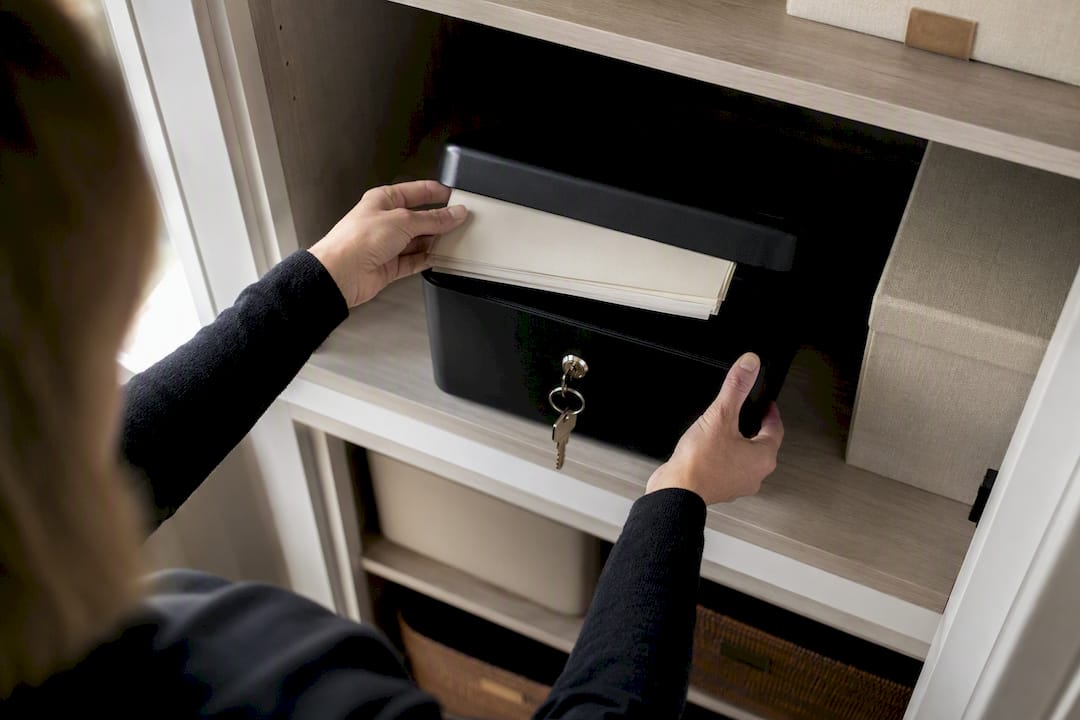
Once your copies arrive, store the originals somewhere secure, a fireproof lock box or a safe deposit box works well, and let one family member act as the keeper of record so copies don’t scatter across different households.
Before you assume a scan will work, ask the institution directly whether they’ll accept a photocopy or PDF, and get that confirmation in an email or letter you can reference later.
Pro Tip: If you run short, most vital records offices offer expedited processing for an added fee, often turning around a replacement copy in a few business days instead of a few weeks.
A Funeral Director’s Honest Take on Ordering Certified Copies
Families rarely think about death certificates until they’re staring down a bank teller who won’t release funds without one. That’s the gap I see most often: people treat the certificate as paperwork, when it’s really the key that unlocks everything else in an estate.
A funeral director’s role here matters more than most families realize going in. Registering the death and ordering that first batch of certified copies is something the funeral home handles as part of the arrangement process, not an extra errand you’re left to figure out alone. At Bravo Family Mortuary, families can complete that ordering online through our PartingPros portal, in English or Spanish, with the same transparent pricing whether you’re arranging everything at 2 AM or during a Tuesday afternoon phone call.
— Steve Olsher
How We Can Help With Certified Copies and Next Steps
You shouldn’t have to guess how many copies to order while you’re also grieving. Bravo Family Mortuary handles death registration and initial certified copy ordering as a standard part of our services, and we do it with the same transparent, all-inclusive pricing on our pricing page that we use for every arrangement, no hidden fees, no upsells buried in fine print.
Because we’re family-owned and independent, we’re not answering to shareholders or a corporate script, just to the families in front of us. If you’re arranging services now, you can complete everything online through PartingPros at any hour, in English or Spanish, without an in-person visit. Veteran families get VA burial benefits paperwork coordinated at no additional charge as part of our funeral and cremation services. If you’re planning ahead instead, our pre-planning options let you sort out documents and decisions before they become urgent. Whatever stage you’re in, take a look at our services and reach out when you’re ready to talk through what your family needs. We are here whenever you are ready.
Sources
These sources back the guidance above and are worth a direct read if you want more detail:
- Nolo — How to get copies of a death certificate
- ProbatePedia — Death certificates: how many, cost, how to get
- LegalClarity — What is a certified copy of a death certificate?
- SmartAsset — How to claim deceased bank accounts without probate
This article is general information, not a substitute for advice from a qualified lawyer. Consult a qualified legal professional about your own circumstances before acting on anything here.