
Skip Costly Chemicals: Embalming vs Refrigeration for US Families
If you need an open-casket viewing after a delay of several days, embalming is usually the right tool. If you’re planning a closed-casket service, cremation, or a green burial, refrigeration alone typically does the job, often at a lower cost. Embalming isn’t legally required in most circumstances, and you’re entitled to ask any funeral home for its written General Price List before deciding anything. Your first call should simply ask what refrigeration they have on hand and how many days it covers.
TL;DR:
- Most funeral homes include two to three days of refrigeration in their packages, but costs and limits vary by region and provider, so always confirm beforehand.
- Embalming is legally optional in almost all US jurisdictions and should be explicitly requested with a clear written price list to avoid unnecessary costs.
- Refrigeration is suitable for short-term preservation, cryo-cooling options like dry ice are only temporary and require proper ventilation and handling.
- State timing rules on how long remains can go without refrigeration fluctuate, often between 24 to 72 hours, so check local regulations, not nationwide standards.
- Families concerned about chemical exposure should explore formaldehyde-free embalming products, while green burial options typically prohibit traditional embalming altogether.
Table of Contents
- Embalming vs Refrigeration at a Glance
- What Embalming Actually Involves
- What Refrigeration and Temporary Cooling Methods Do
- US Rules That Shape Your Timing and Options
- What Embalming and Refrigeration Cost, and What to Ask For
- Environmental Impact and Worker Safety: The Other Tradeoff
- How to Choose Between Embalming and Refrigeration
- Your Practical Checklist From the First Call to Disposition
- How a local family-owned funeral home helps families sort this out
- A Funeral Director’s Honest Take
- How Bravo Family Mortuary Can Help Right Now
- Where to Verify the Details Yourself
- Sources
- FAQ
Embalming vs Refrigeration at a Glance
Embalming replaces bodily fluids with preservative chemicals, most often formaldehyde based, to slow decomposition and restore a natural appearance for viewing. Refrigeration slows the same decomposition process by keeping remains at a consistently low temperature, with no chemicals involved at all. Each method solves a different problem, and knowing which one you actually need saves both money and stress.
Embalming:
- Preserves appearance and slows decomposition for one to two weeks or longer with proper care
- Supports open-casket viewings, extended visitation, and out-of-state transport
- Costs more, uses chemical preservatives, and raises worker-exposure questions
Refrigeration:
- Holds remains at safe temperatures for several days, often within state-set limits
- Works well for closed-casket services, direct cremation, and green burial
- Lower cost and chemical-free, but not every funeral home has the equipment on-site
What Embalming Actually Involves
Embalming is a hands-on process performed by a licensed embalmer, and it typically unfolds in a few clear stages. The embalmer first washes and disinfects the body, then makes small incisions to access an artery and a vein. Embalming fluid, usually a formaldehyde-based solution mixed with water and other preservatives, is pumped in while blood and bodily fluids are drawn out through the vein. Internal cavities are treated separately with a stronger preservative solution. The whole procedure generally takes one to three hours, followed by dressing, cosmetic restoration, and positioning for viewing.
This is why embalming works so well for open-casket services and for families who need extra days to gather from out of town. Once preserved, a body can typically hold its appearance well beyond what refrigeration alone allows, which matters if a viewing has to wait a week or more for relatives to arrive.
The formaldehyde involved isn’t a minor detail, either. OSHA identifies formaldehyde as a workplace hazard and recommends specific ventilation and exposure controls for embalmers, which is one reason licensed funeral homes maintain dedicated prep rooms with engineered air handling. It’s a legitimate occupational safety issue, not just a chemistry footnote, and it’s worth understanding if you’re weighing embalming against a chemical-free option like refrigeration.

What Refrigeration and Temporary Cooling Methods Do
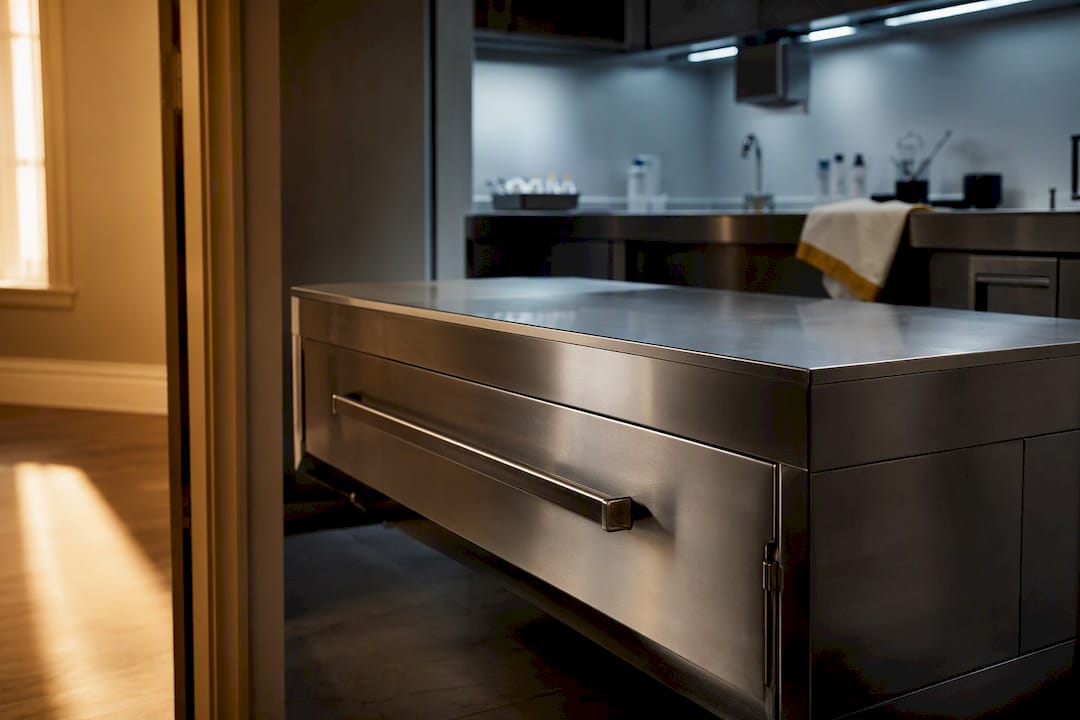
Professional mortuary refrigeration holds remains at or below roughly 40°F, the same range used by Everplans to describe safe short-term preservation without chemicals. Facilities use walk-in coolers or individual refrigerated units, and the cold slows bacterial activity enough to preserve remains for several days while services are arranged. It’s the default option for closed-casket services, direct cremation, and green burial, where chemical preservation isn’t part of the plan.
Not every funeral home owns refrigeration equipment, so it’s worth asking directly rather than assuming.
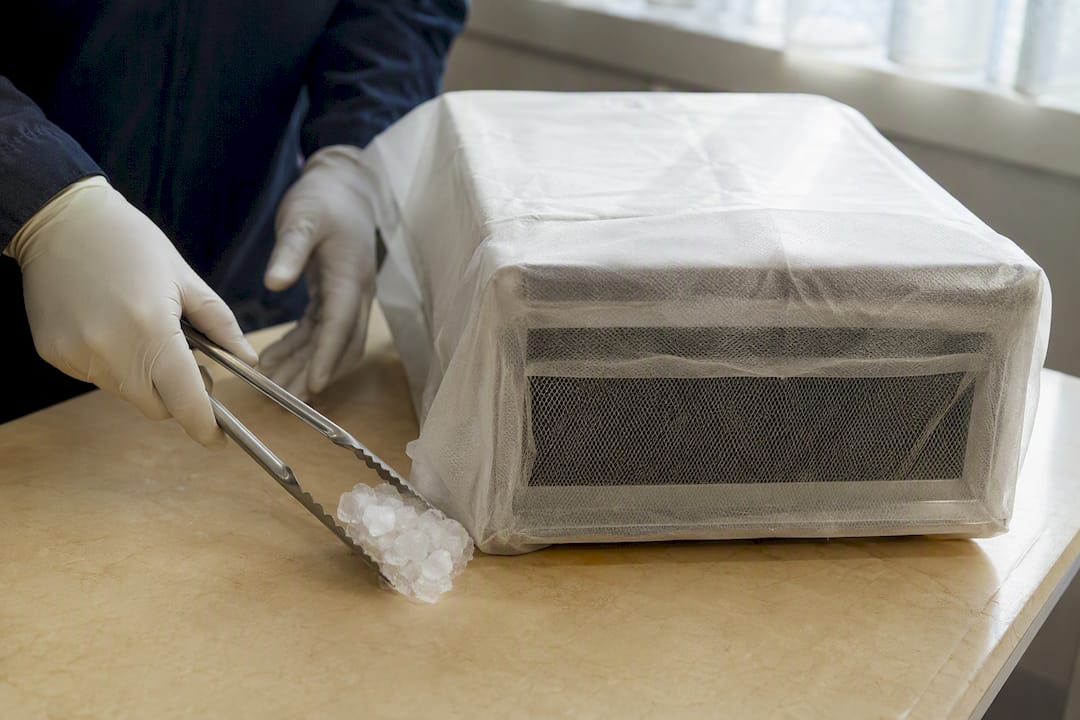
When professional refrigeration isn’t immediately available, dry ice and gel-pack refrigerants serve as short-term bridges, particularly during transport or a home vigil. Dry ice is commonly used at an estimated amount per adult per day, though the exact quantity depends on ambient temperature and how the body is wrapped. Safety matters here: dry ice releases carbon dioxide as it sublimates, so containers need ventilation rather than an airtight seal, and federal hazardous materials rules govern how it’s packaged for transport. Never handle dry ice in a sealed room, and always use gloves, since direct skin contact can cause burns.
US Rules That Shape Your Timing and Options
The FTC’s Funeral Rule is the single most important piece of consumer protection in this decision. It requires funeral homes to hand over an itemized General Price List on request, and it explicitly bars providers from claiming embalming is legally required when it isn’t. In nearly every US circumstance, embalming is optional, not mandatory, a point Funeral Consumers Alliance reinforces for families who feel pressured into it.
State rules add another layer, and they vary more than most people expect. Some states set explicit day limits on how long unembalmed remains can go without refrigeration, often somewhere in the 24 to 72 hour range before refrigeration or embalming becomes necessary. Some jurisdictions cap refrigeration itself, and guidance cited in a Minnesota legislative study describes limits like six calendar days for refrigeration and four for dry ice in certain contexts. These numbers illustrate the range you might encounter, not a nationwide standard, so check with your state’s health or funeral licensing board for the rule that actually applies where you live.
In practice, this means refrigeration alone is often perfectly lawful for a same-week disposition. Embalming becomes more relevant when a viewing has to wait past what refrigeration and state timing rules allow, or when remains need to travel a long distance before final disposition.
What Embalming and Refrigeration Cost, and What to Ask For
Pricing structures differ in a way that catches a lot of families off guard; for example, some funeral homes include refrigeration days within their funeral packages while others charge separately. Embalming is usually billed as a single itemized fee covering the full procedure, cosmetic work, and materials. Refrigeration is often billed by the day, sometimes with a set number of days bundled into a package and additional days charged separately.
Ask for these specifics before agreeing to anything:
- The exact embalming fee, itemized separately from cosmetic or dressing services
- The daily refrigeration rate, and how many days (if any) are included in a package price
- Whether dry ice or other short-term cooling carries its own line-item charge
Costs vary significantly by provider and region, so treat any number you hear from a friend or an online forum as a rough reference point, not a quote.
Pro Tip: Before discussing anything else, ask how many refrigeration days come standard in the package you’re considering. Some homes include two or three days at no extra charge; others charge per day from the start. That single question can change your total by hundreds of dollars.
Environmental Impact and Worker Safety: The Other Tradeoff
Embalming and refrigeration each carry a different kind of footprint, and it’s worth being honest about both. Embalming introduces formaldehyde-based chemicals into the body, which is precisely why OSHA maintains exposure guidance for the workers who perform it. Refrigeration avoids chemicals entirely but relies on continuous electricity to hold a walk-in cooler at temperature, which is its own kind of resource cost, just a quieter one.
Green burial grounds generally prohibit traditional chemical embalming outright, which is one reason refrigeration has become the default preservation pathway for eco-conscious families. Interest in this approach isn’t niche anymore. The National Funeral Directors Association has reported strong consumer interest in green funeral options nationally. If chemical exposure and environmental impact matter to your family, ask directly whether formaldehyde-free embalming products are available, or whether refrigeration alone can carry you through to a green burial.
How to Choose Between Embalming and Refrigeration
Most decisions come down to three questions: how soon is the service, is the casket open or closed, and does anyone in the family have religious or environmental reasons to avoid chemical preservation? A same-week closed-casket service or direct cremation almost always works fine with refrigeration alone. An open-casket viewing delayed a week or more for out-of-town relatives usually calls for embalming.
Before you commit, ask the funeral home these questions directly:
- How many refrigeration days are included, and what’s the daily rate after that?
- Can I get your General Price List in writing before I decide on anything?
- Is embalming actually required for the service I want, or is that optional?
- Do you offer formaldehyde-free embalming products if I’m concerned about chemical exposure?
Treat refusal to provide a written price list, or pressure to embalm without a clear explanation of why, as a red flag worth walking away from.
Pro Tip: If your family wants a brief, private viewing but doesn’t need full embalming, ask about limited restorative work combined with refrigeration. Many funeral homes can freshen appearance for a short viewing window without the full embalming procedure, which keeps costs and chemical use down.
Your Practical Checklist From the First Call to Disposition
The first phone call after a death sets the tone for everything that follows, so it helps to know what to have ready.
- Have the person’s full legal name, date of birth, and location of death on hand before you call
- Ask immediately whether refrigeration is available on-site and how many days it covers
- If death occurred at home, ask the funeral home how quickly they can respond, since timing affects whether refrigeration or dry ice is needed in the interim
- For interstate transport, confirm with the funeral home which state and airline rules apply, since embalming or a sealed container is sometimes required for common carrier transport
- If choosing a home vigil before pickup, follow proper dry ice ventilation and handling as described earlier, never sealing the room or the container airtight
A typical timeline without embalming might run two to four days from death to a closed-casket service or cremation. With embalming, that window often stretches to a week or more without any change in appearance, which is exactly the flexibility it’s designed to buy you.
How a local family-owned funeral home helps families sort this out
We know these decisions rarely happen on a convenient timeline, which is why Bravo Family Mortuary answers calls 24 hours a day, every day, and offers refrigeration, embalming on request, and full green burial guidance depending on what your family actually needs. As a family-owned funeral home with a 5-star rating across our reviews, we don’t answer to corporate shareholders, only to the families we serve.
Every price we quote follows the FTC’s Funeral Rule to the letter. Our General Price List is available online or on request, with no hidden add-ons. Families can complete arrangements entirely through our secure PartingPros portal at any hour, and we serve San Diego County’s Spanish-speaking families with the same care and full bilingual support.
A Funeral Director’s Honest Take
The pressure to embalm without explanation is the part of this industry that bothers me most. Families are grieving and exhausted, and that’s exactly when they’re least equipped to push back on a form that says “embalming required” without a real reason behind it. Refrigeration is a legitimate, dignified choice for most closed-casket and cremation cases, not a lesser substitute. Ask for the price list. Ask what’s actually required. Take the time you need, and know that Bravo Family Mortuary is here whenever you are ready.
— Steve Olsher
How Bravo Family Mortuary Can Help Right Now
Whatever you decide between embalming and refrigeration, you shouldn’t have to fight for a straight answer on pricing to get there. Bravo Family Mortuary is the alternative to funeral homes that bury their costs in vague packages: our pricing is itemized and posted plainly, whether you need refrigeration only, embalming for an open-casket service, direct cremation, traditional burial, or a green burial that skips chemicals entirely.

We also coordinate VA burial benefits paperwork at no additional charge for veteran families, and every arrangement can be completed online through PartingPros at any hour, day or night, without an in-person visit or a sales pitch. If you’re planning ahead rather than facing an immediate need, our pre-planning services let you lock in these decisions now, on your own terms. Start by reviewing our full range of services or call us anytime. We are here whenever you are ready.
Where to Verify the Details Yourself
For readers who want to check any of this directly against the original source:
- 16 CFR Part 453, the FTC’s Funeral Rule, for pricing disclosure and embalming misrepresentation rules
- Cornell Law School’s Wex entry on embalming, for plain-language legal definitions
- OSHA’s formaldehyde hazard guidance, for embalming worker-safety standards
- Funeral Consumers Alliance’s embalming explainer, for consumer rights context
- Your state’s health department or funeral licensing board, for the exact refrigeration and timing limits that apply where you live
Sources
- 16 CFR Part 453 — Funeral Industry Practices (Funeral Rule)
- embalming | Wex | Legal Information Institute | Cornell Law School
- Formaldehyde hazards — OSHA
- MDH Green Burial Study (Minnesota)
FAQ
How long can a funeral home refrigerate a body?
Most funeral homes can refrigerate remains for several days, though some states set specific caps, such as guidance citing six calendar days for refrigeration and four for dry ice in certain jurisdictions. Always confirm the specific limit with your state’s health or funeral board rather than assuming a nationwide standard.
Is embalming legally required in the US?
No. The FTC’s Funeral Rule explicitly prohibits funeral providers from claiming embalming is legally required in most circumstances, and it’s typically optional for direct cremation, immediate burial, and closed-casket services.
Why do they cover your face before closing the casket?
Many funeral homes place a veil or fabric over the face before closing the casket as a gentle, respectful gesture during the final moments of a service, not because of any preservation requirement. It’s a tradition rooted in comfort for the family, not a technical necessity of either embalming or refrigeration.
What should I ask a funeral home before choosing embalming or refrigeration?
Ask for the General Price List in writing, confirm how many refrigeration days are included in any package, and ask directly whether embalming is actually required for the service you want. A provider that hesitates to answer any of these is worth reconsidering.
What don’t funeral directors always volunteer upfront?
Pricing details like included refrigeration days and formaldehyde-free embalming options often go unmentioned unless you ask directly. Bravo Family Mortuary posts its General Price List transparently so families never have to guess.