Do You Have to Buy a Casket for Cremation? The Honest Answer
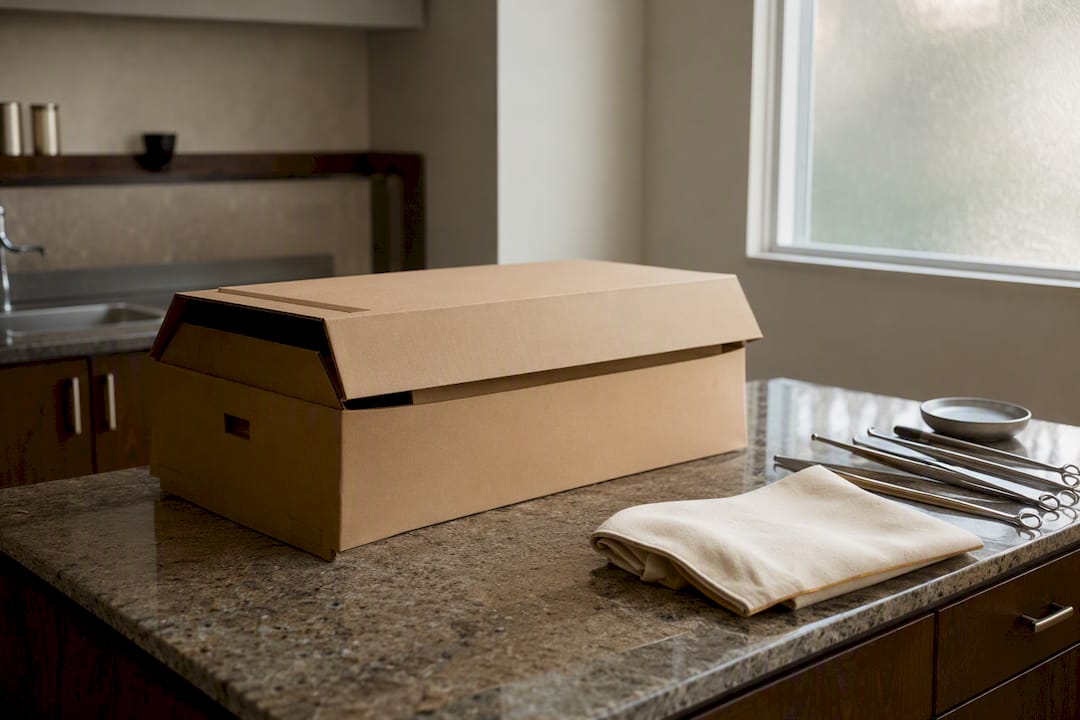
No, you do not have to buy a casket for cremation. Federal law never requires it. The FTC Funeral Rule requires every funeral provider that offers direct cremation to make an affordable “alternative container” available and to disclose it on the General Price List. What crematories do require is a rigid, combustible container sturdy enough to protect staff during handling.
- You can supply your own container, choose a simple alternative container, or rent a casket for a viewing before cremation.
- No state or local law forces a family to purchase a casket for cremation.
Key Takeaways
Federal law never requires a casket for cremation, and the real cost driver is whether a family adds a viewing, rental casket, or extra services on top of the standard alternative container.
| Point | Details |
|---|---|
| No casket requirement | The FTC Funeral Rule bars providers from requiring a casket purchase for direct cremation. |
| Alternative containers are standard | Basic containers made of cardboard or pressed wood typically cost $50 to $400 and are often already included. |
| Rental caskets bridge cost and ceremony | Rental caskets, generally $500 to $1,500, let families hold a viewing without buying a casket that will be cremated. |
| Read the General Price List | Every provider must disclose container options and pricing in writing on the GPL. |
| Bravo Family Mortuary offers transparent options | Bravo Family Mortuary includes alternative container pricing upfront and offers rental caskets, with no pressure to upgrade. |
Table of Contents
- Do You Have to Buy a Casket for Cremation Under Federal Law?
- What Counts as an Acceptable Cremation Container?
- Can You Rent a Casket Instead of Buying One?
- What Does a Cremation Container Actually Cost?
- What Happens Between the Service and the Cremation Itself?
- What Should You Ask a Funeral Home Before You Decide?
- How Bravo Family Mortuary Handles Container Choices and Pricing
- How Bravo Family Mortuary Can Help You Through This Decision
- Sources
Do You Have to Buy a Casket for Cremation Under Federal Law?
The short answer sits in a specific regulation: 16 CFR Part 453, the Funeral Rule enforced by the Federal Trade Commission. It defines an “alternative container” as an unfinished, non-metal enclosure, often cardboard, fiberboard, or pressed wood, and it flatly prohibits any funeral home or crematory from requiring a casket for a direct cremation.
Every funeral home must list this option on its General Price List, the itemized document the FTC Funeral Rule requires providers to hand you or read to you over the phone. Container safety rules do exist at the state level, but they focus on practical handling, not appearance or expense. A container must be rigid, combustible, and able to contain fluids. That’s it.
If a provider tells you a casket is legally required, that statement violates the rule, and you have options:
- Ask to see the General Price List in writing.
- Note the specific statement made and when it was made.
- File a complaint with the FTC or your state’s consumer protection office.
What Counts as an Acceptable Cremation Container?
An “alternative container” isn’t a single product. It’s a category that includes heavy cardboard boxes, fiberboard containers, pressed-wood boxes, and unfinished wood containers, along with composition materials designed specifically for cremation. Crematories require this baseline because staff need to lift, move, and place remains safely, and a rigid enclosure contains fluids during that process, according to industry guidance on cremation containers.
It helps to separate three terms families often blur together:
- Alternative container: the basic, functional enclosure used for cremation itself.
- Cremation casket: a finished, cloth-covered or wood casket built specifically for cremation, often chosen for a viewing.
- Urn: what holds the cremated remains afterward, selected separately and at any point.
Most direct cremation packages include a basic alternative container in the price. If you’d rather not use the standard option, you can furnish your own container, and providers must disclose a separate price for that scenario.
Pro Tip: If appearance matters to you but budget is tight, ask about a plain container that can be draped with a cloth, quilt, or flag for a brief family viewing before transfer. It costs nothing extra and still feels personal.
Can You Rent a Casket Instead of Buying One?
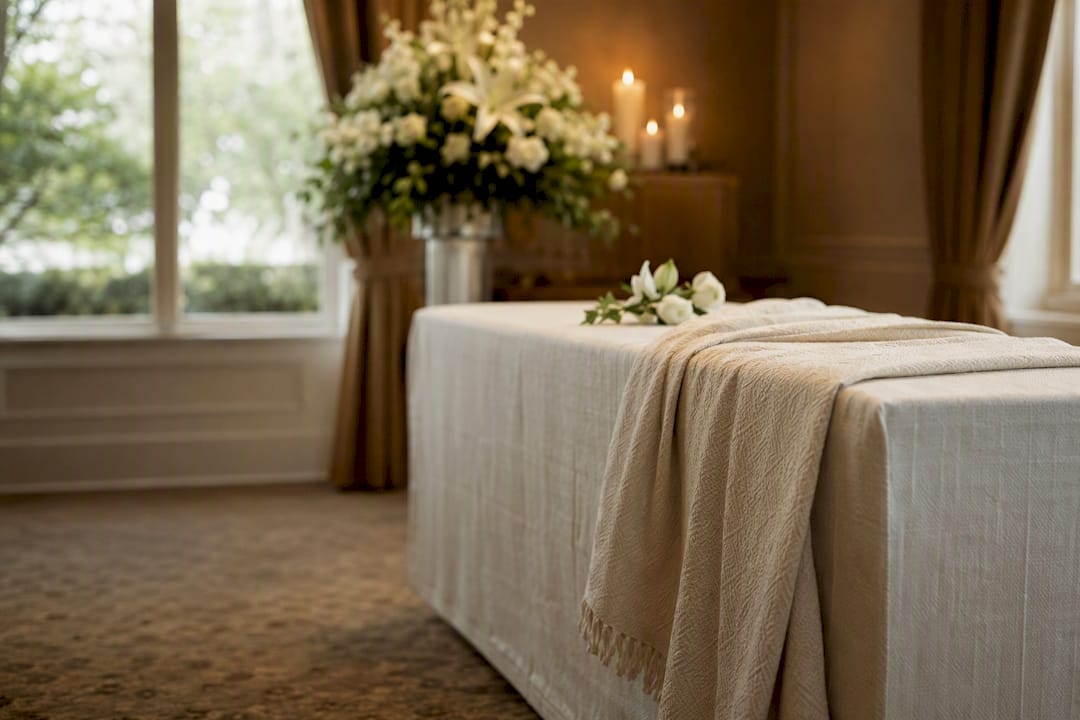
Yes, and many families do exactly this when they want a traditional-looking service without the higher cost of a casket that will ultimately be cremated. A rental casket has a removable, combustible insert. The exterior stays intact for display and the insert goes to the crematory in place of the shell itself, a detail confirmed in FTC guidance on the Funeral Rule.
Families lean toward rental caskets for a few recurring reasons:
- Religious or cultural traditions call for an open casket at a service.
- Extended family is traveling in and wants a formal viewing moment.
- The idea of skipping a service entirely feels too abrupt, even when cost matters.
The logistics are simple. After the viewing, the funeral home transfers the body from the rental casket into the cremation container, and the rental shell is cleaned and reused. The trade-off is straightforward: a rental casket plus a viewing costs more than direct cremation without one, but far less than buying a casket outright for a single use.
What Does a Cremation Container Actually Cost?
Budgeting gets easier once you see the real numbers side by side. A basic alternative container typically runs $50 to $400, and a nicer pressed-wood or cloth-covered cremation casket rarely exceeds $500. Rental caskets land higher, generally $500 to $1,500 depending on your region and the funeral home.
- Direct cremation with the standard included container often totals somewhere around $700 to $1,400 regionally.
- Adding a viewing and a rental casket raises that total, sometimes substantially, once staffing and facility time are factored in.
- Supplying your own container should lower the price, and the General Price List must show that line item separately.
Two families choosing the exact same crematory can end up with very different bills, purely based on whether they added a viewing and rental casket. Neither choice is wrong. The point is knowing which one you’re paying for before you sign anything, and checking that every fee appears on the itemized price list rather than folded into a vague “service fee.”
What Happens Between the Service and the Cremation Itself?
Families often picture cremation as one event, but it’s actually a short sequence with clear handoffs.
- Preparation. The body is prepared and placed in the chosen container, whether that’s a rental casket, an alternative container, or a family-supplied one.
- Viewing, if chosen. Family and friends gather for a brief visitation using the rental casket or a presentable alternative container.
- Transfer. If a rental casket was used, staff move the remains into the rigid cremation container before transport.
- Transport to the crematory. The funeral home typically handles this step along with the required paperwork.
- Cremation. The crematory cremates the remains along with the container itself.
- Return of remains. Ashes come back in a temporary container unless you’ve already selected a permanent urn.
Personal items and most clothing usually go with the deceased unless family requests otherwise. Urn selection can always happen later, so there’s no need to decide everything at once.
What Should You Ask a Funeral Home Before You Decide?
A short list of questions protects you from confusion and, occasionally, from a provider who isn’t following the rules.
- Is a basic alternative container included in the direct cremation price?
- Can we supply our own container, and how much does that lower the cost?
- Do you offer rental caskets, and what’s included in that fee?
- How will the ashes be returned to us, and in what container?
- Are there separate crematory fees not shown in the base price?
Read the General Price List line by line rather than accepting a verbal total. If anything sounds off, or if you’re told a casket purchase is required, document exactly what was said and contact the FTC or your state’s consumer protection agency. Families who plan ahead, even loosely, tend to avoid this stress entirely because pricing gets locked in before emotions are running high.
Pro Tip: Bring a written list of these questions to your first conversation, even if it’s over the phone. It’s far easier to compare answers side by side than to remember them later.
How Bravo Family Mortuary Handles Container Choices and Pricing
At Bravo Family Mortuary, container questions get answered plainly, before you ever sign anything. We include a basic alternative container in our direct cremation pricing, offer rental casket options for families who want a viewing, and welcome families who prefer to supply their own container.
We believe a family should never feel unsure about what they’re paying for, or feel pressured into a casket they don’t need. Every price, including container options, is listed clearly on our pricing page.
A few things families consistently tell us matter most:
- Transparent, all-inclusive pricing with no hidden line items.
- Online arrangements through our secure PartingPros portal, available any hour of the day.
- Bilingual support in English and Spanish, with the same care either way.
- Coordination of VA burial benefits paperwork for veteran families at no added charge.
Questions about a specific situation are always welcome, no pressure attached.
Author’s note on transparency and supporting families
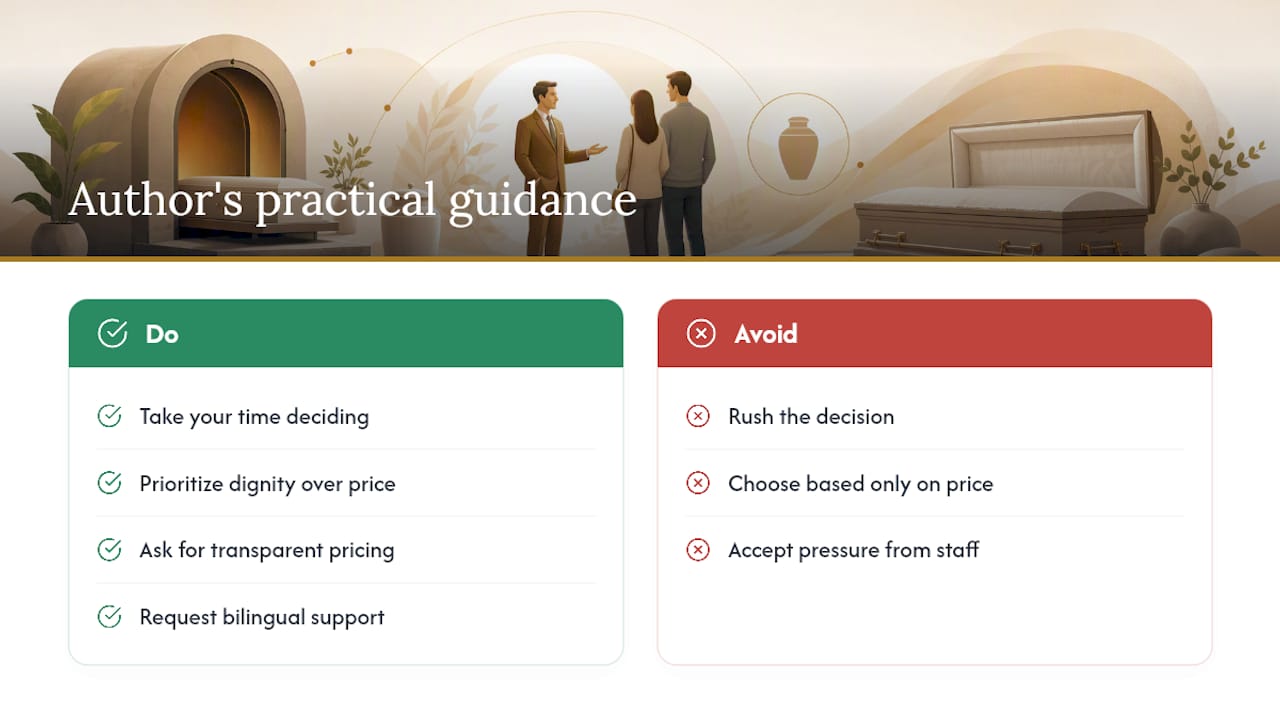
Slow down before deciding on a container. Dignity matters more than any price tag, and you’re allowed to take your time. Bravo Family Mortuary’s approach stays the same either way: transparent pricing, no pressure, and bilingual support whenever you need it.
How Bravo Family Mortuary Can Help You Through This Decision
Bravo Family Mortuary is the alternative to a funeral home that hides container fees behind a vague “service charge.” We list our alternative container and rental casket pricing plainly, so you know the exact cost before you commit to anything.
As a family-owned, 5-star rated provider serving San Diego County, we handle direct cremation, aquamation, traditional and green burial, and full memorial services, all with the same transparent approach to pricing. Every arrangement can be completed online through our secure PartingPros portal, 24 hours a day, without an in-person visit or any sales pressure. We serve English and Spanish-speaking families with equal care, and we coordinate VA burial benefits paperwork for veteran families at no additional charge.
If you’d like to see exactly how container options and other costs appear on our pricing page, or you’re ready to start arrangements through our full range of services, we are here whenever you are ready.
Sources
- 16 CFR Part 453 — Definitions and rule language (eCFR)
- The FTC Funeral Rule — Consumer Information (FTC)