San Diego Catholics: Cremation Rules, Ashes, and Clear Funeral Pricing
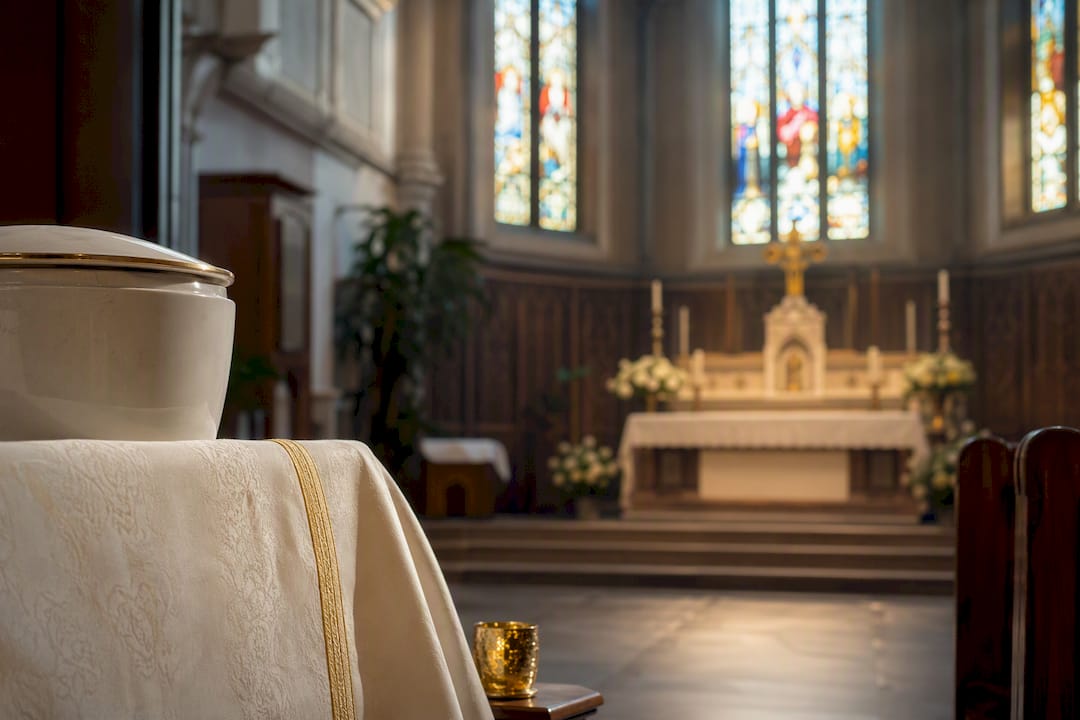
Yes, the Catholic Church permits cremation, but it comes with clear conditions: ashes must be treated with the same reverence given a body and laid to rest in a sacred place. Scattering, dividing, keeping ashes at home, or turning them into jewelry are not permitted under normal circumstances. Burial of the body remains the Church’s preference, though cremation is a legitimate choice families can make with a clear conscience. Local dioceses can allow rare exceptions, so checking with your parish still matters.
TL;DR:
- The Church permits cremation only if ashes are treated reverently and buried in a sacred place, with scattering and dividing ashes generally prohibited.
- Cremated remains should be kept in a worthy vessel and placed in a designated Catholic cemetery or columbarium, not kept at home or turned into jewelry.
- Families are encouraged to consult their local bishop or parish before finalizing cremation plans, as diocesan policies can vary and exceptions are rare.
- The typical sequence involves a funeral Mass with the body present, followed by cremation, but many families opt for cremation first with a memorial service afterward.
- Proper documentation and timely interment are essential, and families should request official confirmation of the placement and burial details to preserve the connection to faith and community.
Table of Contents
- What the Vatican and USCCB Actually Say About Catholic Cremation Rules
- Ashes: What’s Prohibited and What Counts as a Sacred Place
- Funeral Mass and the Order of Christian Funerals With Cremation
- Diocesan Variation and Rare Exceptions on Cremation Rules
- Your Practical Checklist for Catholic Cremation
- How Bravo Family Mortuary Supports Catholic Families in San Diego
- A Pastoral Perspective on Faith and Family Memory
- Ready to Talk Through Your Family’s Options?
- Where to Verify Catholic Cremation Rules Yourself
- Sources
- FAQ
What the Vatican and USCCB Actually Say About Catholic Cremation Rules
Catholic cremation rules trace back to a single, authoritative document: Ad resurgendum cum Christo, issued by the Congregation for the Doctrine of the Faith in 2016. It confirms cremation is allowed unless someone chooses it to deny Catholic teaching, such as the resurrection of the body. Burial still holds a preferred place, though, because it more closely mirrors how Christ’s own body was laid in the tomb and honored.
The reasoning isn’t about ashes being less worthy. It’s about continuity. A body that returns to the earth intact, or ashes reserved together in one place, keeps a person present within the community’s memory and prayer life. Scattered or divided remains break that connection.
The USCCB adds the practical, American layer to this teaching:
- Cremation is permitted, but the Church still recommends burial of the body when possible.
- A 1997 indult lets U.S. bishops permit cremated remains to be present at a Funeral Mass, something not automatically allowed everywhere.
- Local bishops retain authority to set specific diocesan norms within that framework.
Ashes: What’s Prohibited and What Counts as a Sacred Place
Families are often surprised by how specific the rules get once cremation is chosen. The Vatican instruction spells out four things that are not allowed under ordinary circumstances:
- Scattering ashes, whether at sea, in a garden, or from a mountaintop, however meaningful the location felt to the deceased.
- Keeping ashes at home, even temporarily beyond what’s needed before interment.
- Dividing ashes among family members so each person holds a portion.
- Preserving ashes in jewelry, decorative urns displayed at home, or other mementos instead of a place of rest.
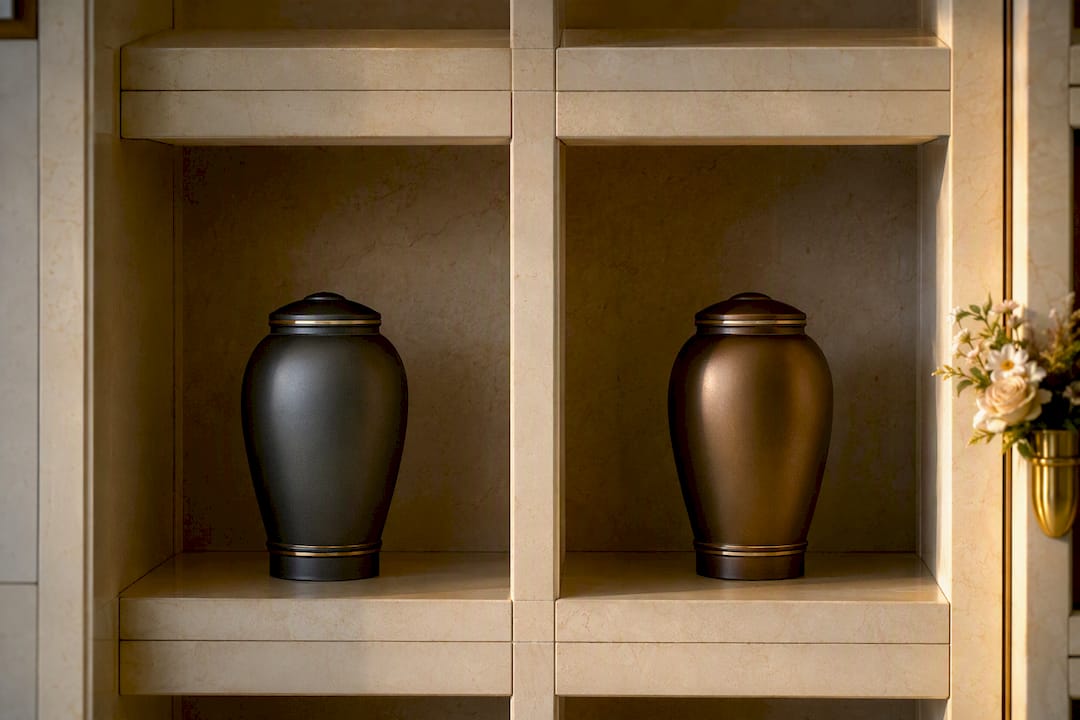
A “sacred place” means a Catholic cemetery, a columbarium, or a designated area within a church that a bishop or pastor has approved for that purpose. It doesn’t need to be elaborate, but it does need to be permanent and connected to the community of faith.
Companion urns, where a married couple’s ashes rest side by side while remaining individually identifiable, are generally acceptable. What matters is that each person’s remains stay intact and traceable. Funeral homes and cemeteries typically keep interment records tied to a specific plot or niche number, which is part of why proper documentation at the time of committal matters so much.
Funeral Mass and the Order of Christian Funerals With Cremation
The Church’s preferred sequence places the funeral rites first, with the body present, followed by cremation afterward. That order lets the community pray over the body itself before final disposition. In practice, though, many families cremate first, whether for cost, logistics, or personal preference, and the liturgy adjusts accordingly.
When ashes are present at a Funeral Mass, U.S. dioceses can permit it under the 1997 indult, though this varies by bishop. A few practical points shape how that Mass looks:
- The cremated remains should rest in a worthy vessel, not a plastic container from the crematory.
- The urn is placed on a small table or stand near where the casket would normally sit, never on the altar itself.
- Prayers or gestures written for a body present, such as placing a pall, may be adapted or omitted.
- After the Mass, a committal rite at the cemetery or columbarium formally lays the ashes to rest, and the site is typically marked with a plaque or nameplate for ongoing remembrance.
Diocesan Variation and Rare Exceptions on Cremation Rules
Not every diocese handles the details identically. The Ordinary, meaning the local bishop, can permit exceptions in genuinely extraordinary cultural situations, but that approval is rare and never assumed. A 2023 letter from the Dicastery for the Doctrine of the Faith clarified that a defined sacred space for commingled ashes may be authorized, but only when each person’s identity is preserved and church authorities sign off.
Some dioceses have published their own guidance further defining what’s allowed locally, including examples of ossuary-style arrangements with individual nameplates, while firmly prohibiting separation of ashes among family members. To confirm what applies where you live:
- Call your parish priest before finalizing cremation plans.
- Check your diocese’s website for published guidance on cremation and disposition.
- Ask your funeral director to confirm current diocesan policy directly, since these details sometimes change.
Your Practical Checklist for Catholic Cremation
Getting this right doesn’t require memorizing canon law. It mostly comes down to a few conversations, made early rather than after the fact.
- Call your parish priest first, ideally before cremation happens, so the funeral rites and cremation timing can be planned together.
- Decide the order of events: funeral Mass with the body present, or cremation first with ashes at a memorial service.
- Choose the cemetery or columbarium where ashes will ultimately rest, and confirm the site is dedicated for Catholic burial.
- Schedule the committal rite as soon as reasonably possible rather than leaving ashes in limbo for months.
- Request written confirmation of interment from the cemetery, including plot or niche number, for family records.
Ask your funeral director and priest directly: Does our diocese permit ashes at Mass? How will the ashes be recorded and interred? What temporary custody arrangements exist if the cemetery date is weeks out? Most families need a short window between cremation and burial, and a good funeral home should explain exactly how that gap is handled and documented.
Pro Tip: Ask your funeral director for written confirmation of the interment location and date before the service. It becomes the one record your family will want years later if anyone asks where a parent or grandparent’s ashes are resting.
If you’re weighing cremation against traditional burial for a Catholic loved one, working through these questions with your parish first makes every later decision easier.
How Bravo Family Mortuary Supports Catholic Families in San Diego
Coordinating a funeral home, a parish, and a cemetery at the same time is a lot to carry while grieving. Bravo Family Mortuary handles that coordination directly, so San Diego families aren’t left making calls alone.
- Direct cremation, cremation with a memorial service, and witness cremation for families who want to be present
- Coordination of committal timing with your chosen Catholic cemetery or columbarium
- VA burial benefits paperwork handled at no additional charge for veteran families
- Bilingual Spanish and English support throughout every step
- Transparent, all-inclusive pricing shown upfront, with no hidden fees added later
Because this funeral home is family owned and independent, staff can take the time to confirm a diocese’s specific requirements with your local parish rather than applying a one-size-fits-all process. That matters when the goal is honoring both your faith and your loved one’s memory correctly the first time.
A Pastoral Perspective on Faith and Family Memory
People choose cremation for reasons that have nothing to do with faith commitment: cost, distance, a parent’s own wishes. None of that makes someone a lesser Catholic. What matters more than the method is the follow-through: talking to a priest, choosing a resting place with intention, and resisting the pull to keep ashes close at hand out of grief rather than doctrine. The Church’s rules aren’t obstacles. They’re a framework built so that love for the dead has somewhere permanent to land.
— Steve Olsher
Ready to Talk Through Your Family’s Options?
Bravo Family Mortuary is the alternative to funeral homes that make you guess at costs or drive across town for every signature. Every service, from direct cremation to a full memorial ceremony with committal coordination, is priced transparently on our pricing page, and arrangements can be completed securely online at any hour through PartingPros.
If your family is navigating Catholic cremation rules and needs help coordinating with a parish or cemetery, our bilingual staff can walk through it with you in Spanish or English. Veteran families receive VA paperwork assistance at no added cost, and our cremation services include options like witness cremation for those who want to be present. We are here whenever you are are ready. Review current pricing or reach out when it’s time to start the conversation.
Where to Verify Catholic Cremation Rules Yourself
For the primary sources behind these rules, read Ad resurgendum cum Christo directly from the Vatican, the USCCB’s guidance on cremation, and the 2023 USCCB document on proper disposition.
Sources
- Ad resurgendum cum Christo (Congregation for the Doctrine of the Faith, 2016)
- Cremation and the Order of Christian Funerals (USCCB)
FAQ
What are the new guidelines for Catholic cremation?
A 2023 letter from the Dicastery for the Doctrine of the Faith clarified that dioceses may authorize a defined sacred space for commingled ashes, but only when each person’s identity is preserved and church authorities approve it.
Is it okay to be cremated if you are Catholic?
Yes. Cremation has been permitted according to Church teaching, provided it isn’t chosen to deny Catholic beliefs like the resurrection, and provided the ashes are ultimately buried or interred in a sacred place rather than scattered or kept at home.
How long do human ashes last in an urn?
Cremated remains don’t decompose and can last indefinitely in a proper urn, which is one reason the Church asks families to move toward permanent interment rather than indefinite home storage.
What does God say about keeping ashes?
Catholic teaching doesn’t cite a specific scripture forbidding home storage, but the Church’s guidance holds that reserving ashes in a communal, sacred place better reflects belief in the resurrection and keeps the deceased connected to the community’s ongoing prayer, which is why the Vatican instruction discourages keeping ashes at home.